Hunters & Gatherers: Navigating the Landscape of Bug Bounties
This panel discussion explores the operational and strategic aspects of managing and participating in bug bounty programs from both the researcher and program manager perspectives. The speakers discuss the importance of clear communication, effective triage, and the balance between automated scanning and manual security research. The panel highlights the necessity of integrating bug bounty findings into the broader software development lifecycle to improve overall security posture.
Beyond the Bounty: Why Your Recon Strategy is Failing You
TLDR: Bug bounty programs are not just about finding bugs; they are about understanding the operational reality of the targets you hunt. This panel from DEF CON 2024 breaks down how successful researchers move past basic automated scanning to find high-impact vulnerabilities. By aligning your reconnaissance with the target's development lifecycle and focusing on business logic, you can significantly increase your success rate and avoid the noise of low-quality, duplicate reports.
Most bug bounty hunters treat their targets like a static list of endpoints. They run a scanner, collect a pile of low-hanging fruit, and wonder why their reports get closed as "informative" or "duplicate." The reality is that the most successful researchers in the game are not just looking for vulnerabilities; they are looking for the business logic that makes the application tick. If you are still relying solely on automated tools to find your next payout, you are missing the forest for the trees.
The Trap of Automated Reconnaissance
Tools like Nmap and the Project Discovery toolkit are essential for mapping an attack surface, but they are not a substitute for critical thinking. When you run a mass scan, you are competing with every other researcher on the platform. You are fighting for the same low-quality bugs, and you are likely hitting the same rate limits that trigger defensive responses.
The panel emphasized that the most valuable research happens when you stop treating the target as a black box and start thinking like the developer who built it. If you find a misconfiguration, do not just report it. Ask yourself why that configuration exists. Is it a legacy setting? Is it a workaround for a broken authentication flow? Understanding the "why" behind a vulnerability is what separates a script kiddie from a researcher who consistently lands critical findings.
Moving from Scanning to Logic Testing
When you move beyond active scanning, you start finding vulnerabilities that automated tools simply cannot see. OWASP Injection and Broken Access Control are rarely found by a simple crawler. They require you to understand the application's state.
For example, when testing for IDOR, do not just change a user ID in a URL. Look at how the application handles session tokens and how it validates requests across different API endpoints. Use a man-in-the-middle proxy like Burp Suite to inspect the traffic and look for patterns in how the server responds to different inputs. If you see a pattern, you have found a potential entry point.
The Power of Persistence and Context
One of the most overlooked aspects of bug bounty hunting is the context of the target. A vulnerability that is critical in one application might be a non-issue in another. The panel highlighted that the best researchers are those who take the time to understand the target's environment. This means reading the documentation, understanding the API structure, and even looking at the public-facing infrastructure to see what technologies are in use.
If you are hunting on a program that has been around for years, the low-hanging fruit is gone. You need to dig deeper. This might mean looking at older versions of the application, testing obscure features, or finding ways to chain together multiple low-severity bugs to create a high-impact exploit. This is where the real work happens, and it is where the real rewards are found.
Defensive Alignment
From a defensive perspective, the goal is to make it as hard as possible for an attacker to find these vulnerabilities. This means implementing strong authentication, validating all user input, and ensuring that your application is configured securely by default. It also means having a robust process for triaging and fixing the bugs that are reported. If you are a program manager, the best thing you can do is to provide clear, concise feedback to the researchers who report bugs. This builds trust and encourages them to continue hunting on your program.
What to Do Next
Stop chasing the same bugs as everyone else. If you are stuck, take a step back and look at the application from a different angle. What are the most critical parts of the application? Where is the sensitive data stored? How is it accessed? These are the questions that lead to high-impact findings. And remember, the goal is not just to find a bug; it is to understand the system well enough to find the bugs that everyone else missed. Keep learning, keep testing, and do not be afraid to go deep. The next big bounty is waiting for someone who is willing to put in the work.
Vulnerability Classes
Target Technologies
Attack Techniques
OWASP Categories
Up Next From This Conference
Breaking Secure Web Gateways for Fun and Profit
Listen to the Whispers: Web Timing Attacks That Actually Work
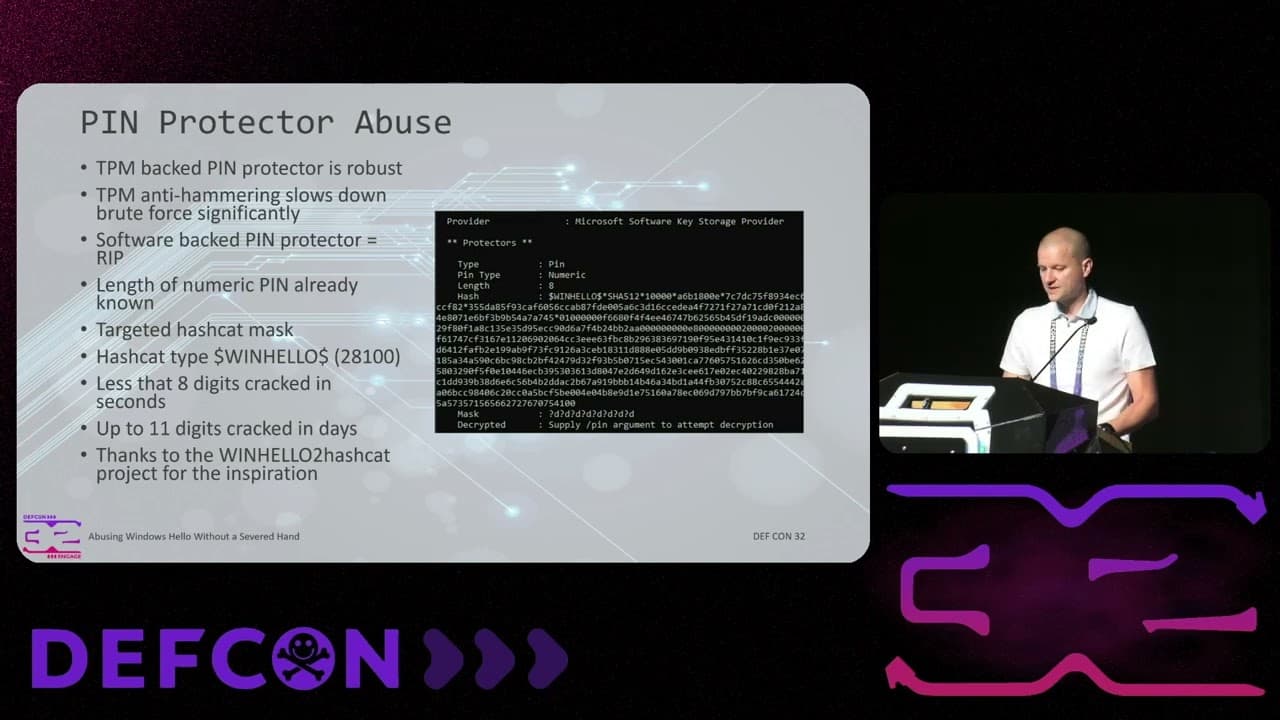
Abusing Windows Hello Without a Severed Hand
Similar Talks
Kill List: Hacking an Assassination Site on the Dark Web
Anyone Can Hack IoT: A Beginner's Guide to Hacking Your First IoT Device