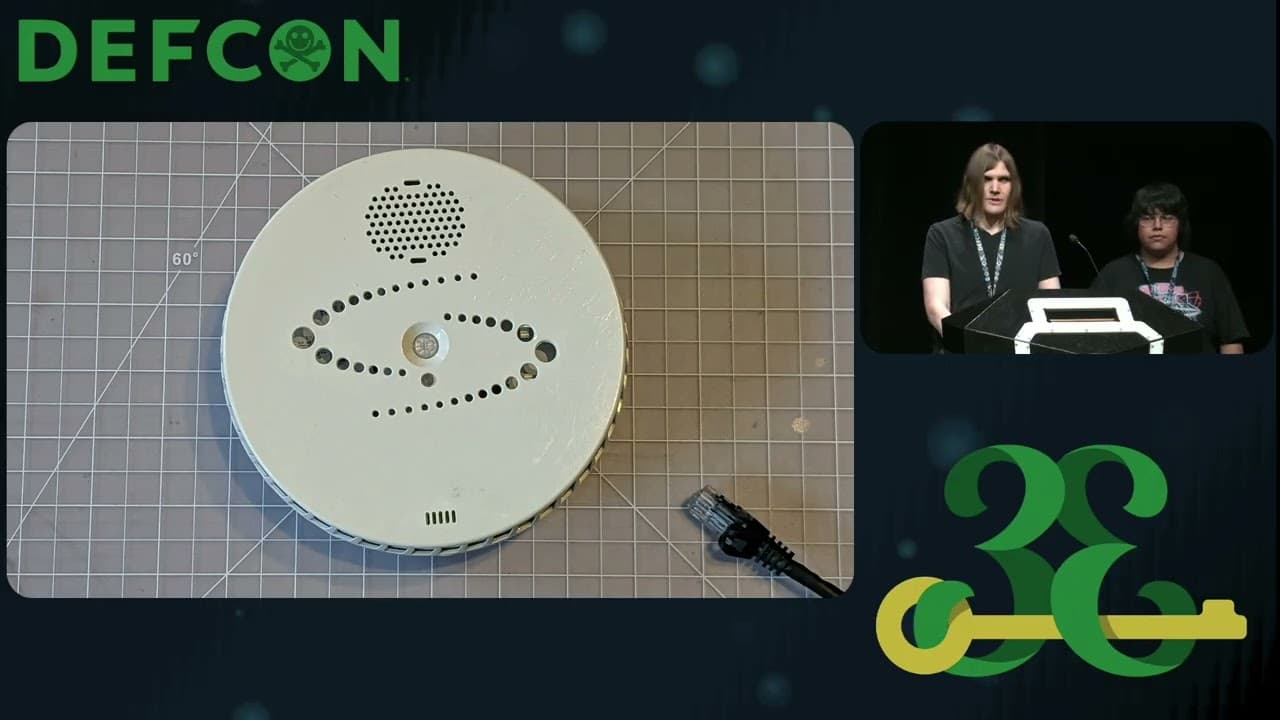
Initial Access Dojo
This presentation demonstrates a multi-stage social engineering campaign used to gain physical and logical access to a secure facility. The attack leverages open-source intelligence (OSINT) to identify employees, followed by targeted phishing and impersonation to bypass physical security controls. The talk highlights the effectiveness of combining psychological manipulation with physical reconnaissance to compromise high-security environments.
Physical Access is Still the Easiest Way to Pwn a Data Center
TLDR: This talk from DEF CON 2024 breaks down a multi-stage social engineering campaign that successfully compromised a high-security facility by blending OSINT with physical impersonation. The researchers demonstrate how easily attackers can bypass physical security controls by exploiting human trust and weak verification processes. For pentesters, this is a masterclass in how to chain T1566-phishing and T1592-gather-victim-org-information to gain physical entry.
Most security professionals spend their careers obsessing over zero-days, complex RCE chains, and sophisticated cloud misconfigurations. We build our threat models around remote exploitation and automated scanning. Yet, as this research from DEF CON 2024 proves, the most effective way to compromise a secure facility remains the same as it was twenty years ago: walking through the front door with a smile and a fake badge.
The Anatomy of a Physical Breach
The researchers behind this engagement didn't rely on a single exploit. Instead, they mapped out a multi-stage campaign that treated physical security as just another software stack with a logic flaw. The attack began with extensive reconnaissance. By scraping social media and public-facing technical databases, they identified key personnel, their roles, and even the specific design of the company's ID badges.
This is the classic T1593-search-open-technical-databases approach. Once they had the visual identity of the organization, they moved to impersonation. They didn't just print a badge; they understood the psychological triggers that make security guards lower their guard. By timing their arrival to coincide with a high-stress event—in this case, a simulated health protocol review—they created a situation where the target was more likely to prioritize compliance over verification.
Exploiting the Human Factor
The core of this attack is the exploitation of A07:2021-Identification and Authentication Failures. When you combine a lack of multi-factor authentication (MFA) on physical access points with a culture that values "helping" over "verifying," you create a massive security gap.
During the demo, the team showed how they used a simple, low-tech trick: registering their own phone number with the name of a compromised user in the company's internal directory. When they called the front desk, the caller ID displayed the name of a trusted employee. It sounds trivial, but it works because it exploits the implicit trust in internal systems.
For those of us conducting red team engagements, this is a reminder that your physical security assessment should be as rigorous as your network penetration test. If you can't get into the building, you can't plug in your Rubber Ducky or access the local network. The impact of this kind of breach is total. Once inside, the researchers had access to the data center, which is the ultimate goal for any adversary.
Technical Execution and Tooling
While the talk focused on the social engineering aspect, the technical execution was precise. They used standard tools to manage their campaign, ensuring that their communications were consistent and their "cover" was maintained. They didn't use custom malware; they used the organization's own processes against them.
For example, when they needed to brute-force a weak password, they didn't just guess. They used the organization's naming conventions and current year to build a dictionary. A simple command like this is often enough when MFA is absent:
# Example of a targeted dictionary generation based on common patterns
# identified during the OSINT phase
crunch 8 8 -t %%%%%%%% -o wordlist.txt
This is a stark reminder that T1566-phishing is not just about email. It is about manipulating the entire communication channel, including phone calls and in-person interactions.
The Defensive Reality
Defending against this is notoriously difficult because it requires changing human behavior, not just patching software. However, the technical controls are clear. If your facility relies on proximity cards that can be cloned or visual inspection that can be fooled by a well-made fake, you are vulnerable.
Organizations must implement strict, non-negotiable verification protocols. If a "maintenance technician" shows up, they should be verified through an out-of-band channel, not just by looking at a badge. Furthermore, the lack of MFA on physical access points is a critical failure. Modern systems should require a card-plus-PIN or biometric verification for any sensitive area.
What to Do Next
If you are a pentester, stop treating physical security as an afterthought. The next time you are scoped for a red team engagement, push for physical access to be included. If you are a defender, audit your visitor management process. Ask yourself: if someone walked in today with a fake badge and a sense of urgency, would your team stop them, or would they hold the door open?
The barrier to entry for this kind of attack is incredibly low. It requires no expensive hardware, no zero-day exploits, and no massive infrastructure. It only requires a bit of research, a lot of confidence, and a target that hasn't trained its employees to question the unexpected. Start by testing your own organization's resistance to these basic social engineering tactics. You might be surprised by how far a little bit of "helpfulness" can get an attacker.
Vulnerability Classes
Target Technologies
Attack Techniques
OWASP Categories
All Tags
Up Next From This Conference
Breaking Secure Web Gateways for Fun and Profit
Listen to the Whispers: Web Timing Attacks That Actually Work
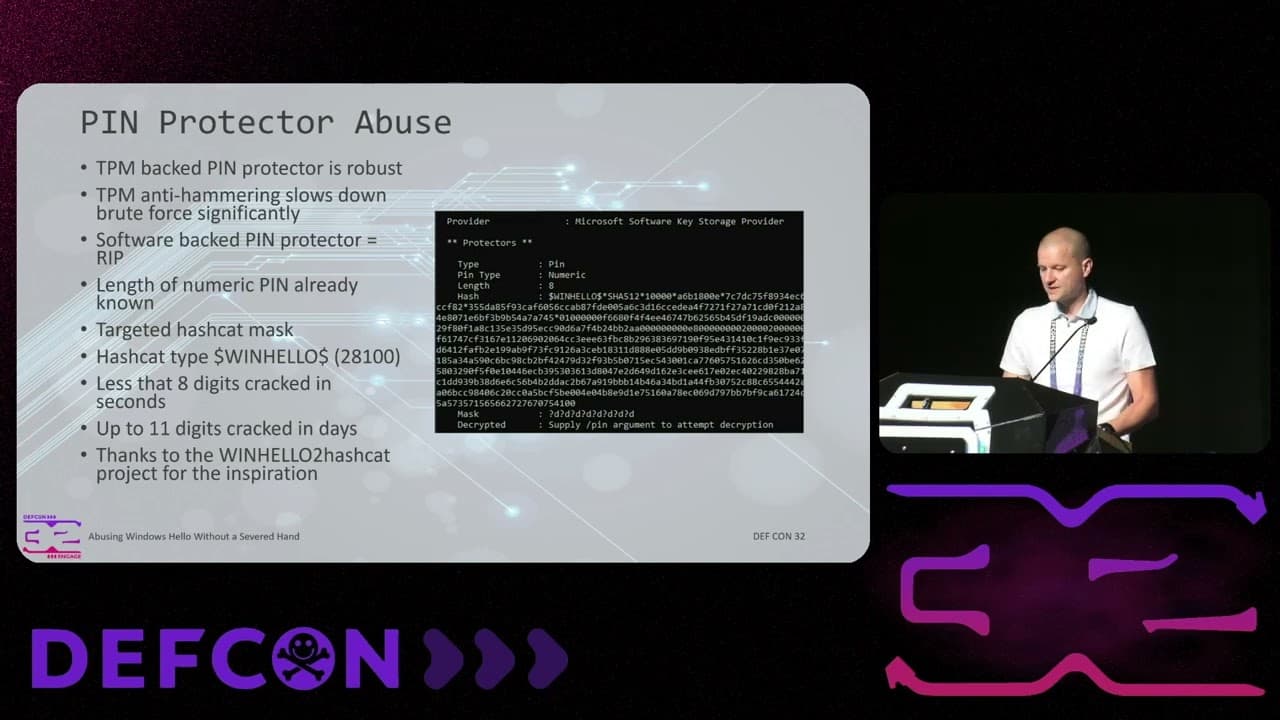
Abusing Windows Hello Without a Severed Hand
Similar Talks
Inside the FBI's Secret Encrypted Phone Company 'Anom'
Kill List: Hacking an Assassination Site on the Dark Web