Kill List: Hacking an Assassination Site on the Dark Web
This talk details the investigation and exploitation of a dark web 'murder-for-hire' site, revealing it to be a sophisticated scam network. The researcher demonstrates how to identify and exploit vulnerabilities such as insecure direct object references (IDOR), open directories, and SQL injection to gain remote code execution (RCE) on the underlying server. The presentation highlights the use of OSINT and technical analysis to map the scam's infrastructure and expose the perpetrators. The talk concludes with a discussion on the challenges of coordinating with law enforcement to address criminal activity on the dark web.
How a Simple IDOR and Open Directory Exposed a Global Murder-for-Hire Scam
TLDR: A deep dive into the investigation of a dark web "murder-for-hire" site reveals that these platforms are often sophisticated, multi-layered scams rather than genuine criminal services. By exploiting Insecure Direct Object References (IDOR) and Security Misconfigurations like open directories, researchers were able to map the entire scam network and identify the perpetrators. This research proves that even the most "hardened" dark web criminal infrastructure often relies on basic, preventable web vulnerabilities.
The dark web is frequently portrayed as a mysterious, impenetrable layer of the internet where anything can be purchased, including violence. However, the reality is often far more mundane and significantly more fragile. When researchers began investigating a specific "murder-for-hire" site, they didn't find a high-tech criminal enterprise. They found a collection of amateurish web misconfigurations that allowed for a complete compromise of the site's backend, exposing the entire scam operation.
Mapping the Scam Infrastructure
The investigation began by treating the site as a standard web application. The researchers quickly identified that the site was not just a single entity but a sprawling network of interconnected scams. By analyzing the site's structure, they discovered that the "murder-for-hire" service was a front for a larger, more complex operation designed to harvest Bitcoin from desperate or malicious users.
The primary vulnerability that broke the site wide open was a classic IDOR. The site’s messaging system used sequential integers in the URL parameters to retrieve messages. By simply incrementing these numbers, the researchers could access communications between the site administrators and their victims.
# Example of the vulnerable parameter identified in the URL
/p?message=123
Changing the value to 122, 121, and so on allowed the researchers to scrape the entire history of the site's interactions. This revealed that the "hitmen" were non-existent. The administrators were simply playing both sides, collecting payments and then providing excuses for why a "hit" hadn't been carried out, often demanding more Bitcoin to "re-assign" the job to a more "qualified" hitman.
Exploiting Server Misconfigurations
Beyond the IDOR, the site suffered from severe Security Misconfigurations. The Apache web server was configured to allow directory indexing, which exposed the entire file structure of the site. This is a common but critical oversight that provides an attacker with a roadmap of the application's sensitive files.
By navigating to the root directory, the researchers found a treasure trove of information, including configuration files, images, and even screenshots of the administrator's own desktop. One such screenshot contained the credentials for the site's email server, which was being used to manage communications with victims.
[SMTP + SERVER DETAILS]
$smtpserver = "sapro6z7whekzg6uw.onion"
$port = "465"
$username = "besa@sigaint.org"
$password = "frunzaaa"
With these credentials, the researchers gained full control over the site's communication channels. They also discovered an unused mailing component that contained the administrator's email and password in plain text. This level of negligence is common in dark web operations, where the focus is on rapid deployment and obfuscation rather than secure development practices.
From SQL Injection to Remote Code Execution
The researchers didn't stop at directory traversal. They identified a SQL Injection vulnerability in the site's search functionality. By injecting standard payloads, they were able to bypass authentication and gain administrative access to the backend database.
Once they had administrative access, they used the site's file upload functionality to push a web shell to the server. This provided them with Remote Code Execution (RCE), allowing them to traverse the server's filesystem, exfiltrate the entire codebase, and map the relationships between the various scam sites in the network. This level of access is the holy grail for any pentester, and in this case, it was achieved through a chain of basic, well-documented vulnerabilities.
Real-World Implications for Pentesters
For those of us conducting penetration tests, this research serves as a stark reminder that the most effective attacks often target the lowest-hanging fruit. When you are testing a client's application, don't get distracted by complex, theoretical attack vectors. Start with the basics. Are directories indexed? Are parameters predictable? Is the database properly sanitized?
In a professional engagement, finding an IDOR or an open directory is often enough to demonstrate a critical risk. You don't need to chain five different zero-days to prove that an application is insecure. The goal is to provide your client with actionable findings that, if remediated, will significantly improve their security posture.
Defensive Strategies
The vulnerabilities exploited here are entirely preventable. For blue teams, the focus should be on:
- Strict Access Control: Implement robust, server-side authorization checks for every request. Never rely on client-side parameters to determine access.
- Server Hardening: Disable directory indexing in your web server configuration. Ensure that sensitive files are not accessible from the web root.
- Input Validation: Use parameterized queries for all database interactions to prevent SQL injection.
- Secrets Management: Never store credentials in plain text files within the web root. Use environment variables or a dedicated secrets management service.
The dark web is not a magical place where the rules of security don't apply. It is just another environment where misconfigured servers and poor coding practices lead to inevitable compromise. If you are a researcher or a pentester, keep digging into these systems. You will likely find that the "criminal masterminds" behind these sites are just as vulnerable to basic web attacks as any other developer.
Vulnerability Classes
Tools Used
Target Technologies
Attack Techniques
Up Next From This Conference

DisguiseDelimit: Exploiting Synology NAS with Delimiters and Novel Tricks
Browser Extension Clickjacking: One Click and Your Credit Card Is Stolen
Can't Stop the ROP: Automating Universal ASLR Bypasses for Windows
Similar Talks
Inside the FBI's Secret Encrypted Phone Company 'Anom'
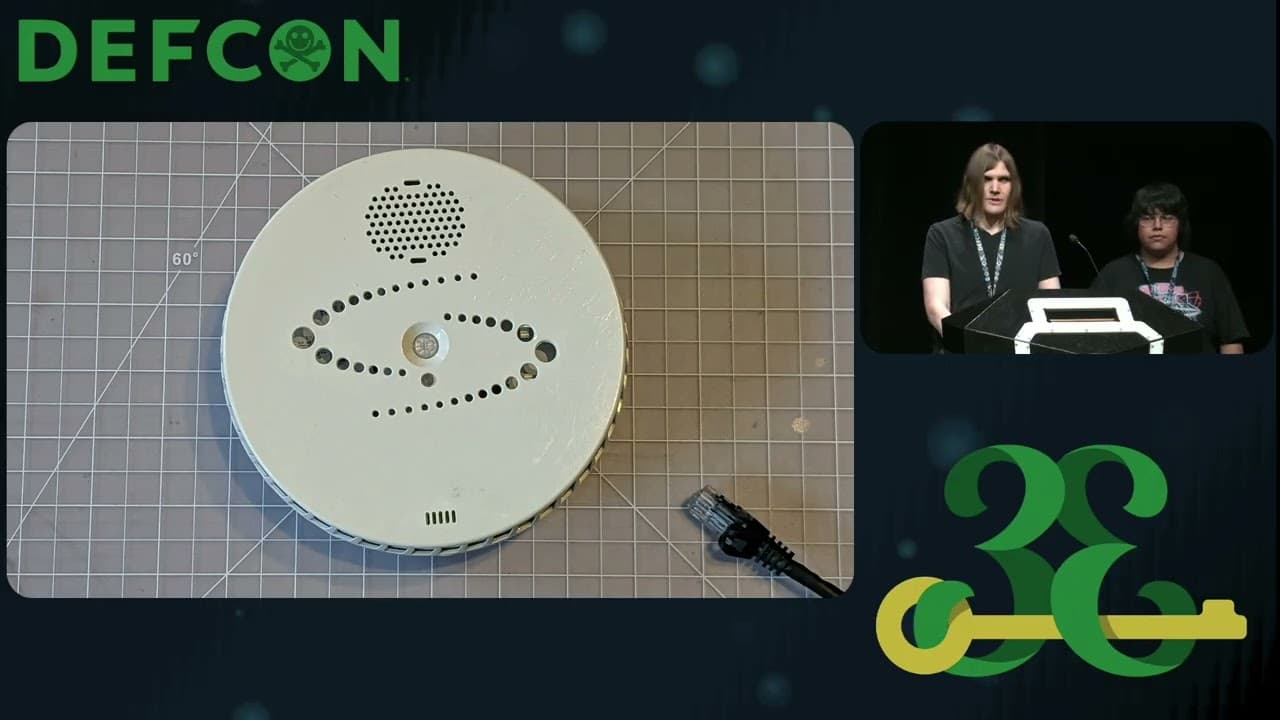
Unmasking the Snitch Puck: The Creepy IoT Surveillance Tech in the School Bathroom