No Brain, No Gain: The Next Frontier in IoT/ICS Authentication
This talk introduces a novel biometric authentication method for IoT and ICS environments using electroencephalography (EEG) signals. The researchers demonstrate how brainwave patterns can be processed using Gaussian Mixture Models (GMM) to create unique, dynamic, and replay-resistant authentication signatures. The system is designed to mitigate risks associated with traditional static credentials and biometric spoofing in critical infrastructure. A practical demonstration shows the integration of an EEG headset with a Raspberry Pi to control access based on cognitive activity.
Beyond Passwords: Why Your Brainwaves Might Be the Next Authentication Factor
TLDR: Researchers at DEF CON 2025 demonstrated a novel authentication method using electroencephalography (EEG) signals processed through Gaussian Mixture Models (GMM). By mapping unique cognitive responses to specific stimuli, the team created a dynamic, replay-resistant authentication signature that mitigates risks from static credential theft and biometric spoofing. While still in the research phase, this approach highlights a potential path forward for securing high-stakes IoT and industrial control systems (ICS) where traditional authentication often fails.
Authentication in industrial control systems and IoT environments is fundamentally broken. We rely on static credentials, shared secrets, or easily spoofed biometrics like fingerprints and facial recognition. When these are compromised, the impact isn't just a data breach; it is physical damage to critical infrastructure. The research presented at DEF CON 2025 on EEG-based authentication shifts the focus from what a user has or knows to the unique, dynamic electrical patterns of the human brain.
The Mechanics of Cognitive Authentication
The core of this research lies in the fact that human neurons communicate via electrical impulses, which can be captured as EEG signals. These signals are not just random noise; they contain distinct frequency bands—Delta, Theta, Alpha, Beta, and Gamma—that correlate with specific mental states. The researchers identified that these patterns are unique to each individual, effectively creating a "cognitive fingerprint."
To turn this raw, noisy data into an authentication factor, the team utilized Gaussian Mixture Models (GMM). A GMM is a probabilistic model that assumes all data points are generated from a mixture of a finite number of Gaussian distributions with unknown parameters. In this context, the GMM acts as a classifier that learns the specific "shape" of an individual's brain activity when they are performing a controlled cognitive task, such as focusing on a specific image or recalling a memory.
The system operates in two phases. First, the registration phase captures the user's EEG data while they perform a task. This data is cleaned through a pipeline that includes filtering, artifact removal (to strip out eye blinks and muscle movements), and segmentation. Second, the authentication phase compares live EEG input against the stored GMM profile. If the live signal matches the learned distribution with sufficient probability, the system grants access.
Why This Matters for Pentesters
For those of us conducting red team engagements or bug bounty research on IoT and ICS, the current landscape is dominated by Identification and Authentication Failures. We see hardcoded credentials, lack of multi-factor authentication, and systems that are trivial to bypass via Adversary-in-the-Middle (AitM) attacks or simple credential replay.
The EEG approach is inherently resistant to these common vectors. Because the authentication signature is generated dynamically based on a live cognitive task, a captured "password" or "hash" is useless to an attacker. You cannot replay a brainwave pattern that was generated in response to a specific, time-bound stimulus. Furthermore, the system provides intrinsic liveness detection. If the user is not alive and metabolically active, the EEG signals simply do not exist. This effectively kills the threat of post-mortem biometric acquisition, a vulnerability that plagues traditional fingerprint and facial recognition systems.
Technical Hurdles and Real-World Constraints
Before we start replacing SSH keys with EEG headsets, we have to acknowledge the limitations. The researchers noted that raw EEG data is incredibly sensitive to environmental noise. Power lines, nearby electronics, and even the user's own physical movement can introduce artifacts that degrade the signal-to-noise ratio. The preprocessing pipeline is not just an optional step; it is the difference between a functional system and a denial-of-service event.
Furthermore, the "user comfort" factor is a massive barrier. Wearing a multi-channel EEG headset to log into a terminal is not practical for most workflows. However, the research suggests that as portable, low-channel EEG devices become more common, the barrier to entry will drop. The current implementation uses a Raspberry Pi as the controller, demonstrating that the processing power required for GMM-based authentication is well within the reach of modern embedded systems.
The Defensive Outlook
Defenders in the ICS space should view this as a blueprint for "adaptive security." The goal is to move away from static, easily exfiltrated secrets. While EEG-based authentication is likely years away from widespread industrial deployment, the principles of using dynamic, context-dependent data for authentication are sound.
If you are auditing a system that claims to be "secure," ask yourself: what happens when the static secret is stolen? If the answer is "game over," the system is fundamentally insecure. We need to push for authentication mechanisms that are as dynamic as the environments they protect. Whether that ends up being brainwaves, behavioral biometrics, or something else entirely, the era of relying on static passwords for critical infrastructure must come to an end. Keep an eye on how these probabilistic models evolve; they are likely to become a standard component of future authentication stacks.
Vulnerability Classes
Tools Used
Target Technologies
Attack Techniques
OWASP Categories
All Tags
Up Next From This Conference

Reverse Engineering Go-Based Malware with AI

No Brain, No Gain: The Next Frontier in IoT/ICS Authentication
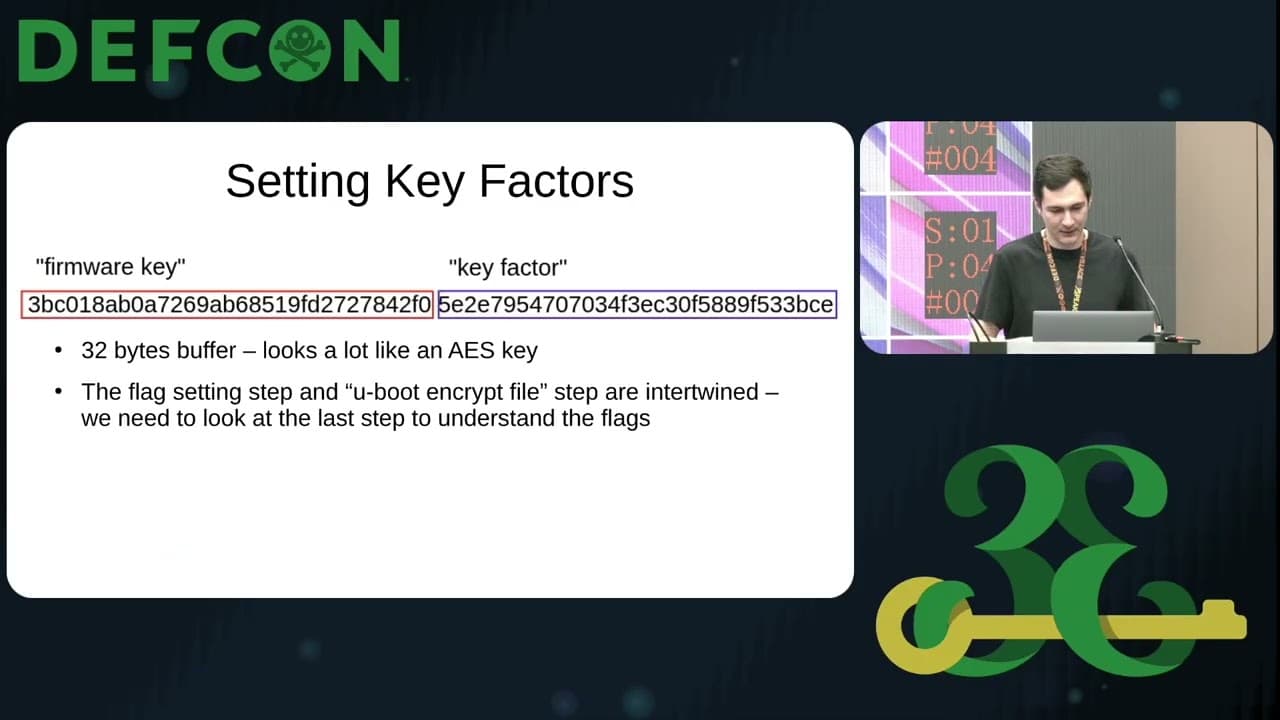
Never Enough About Cameras - The Firmware Encryption Keys Hidden Under the Rug
Similar Talks
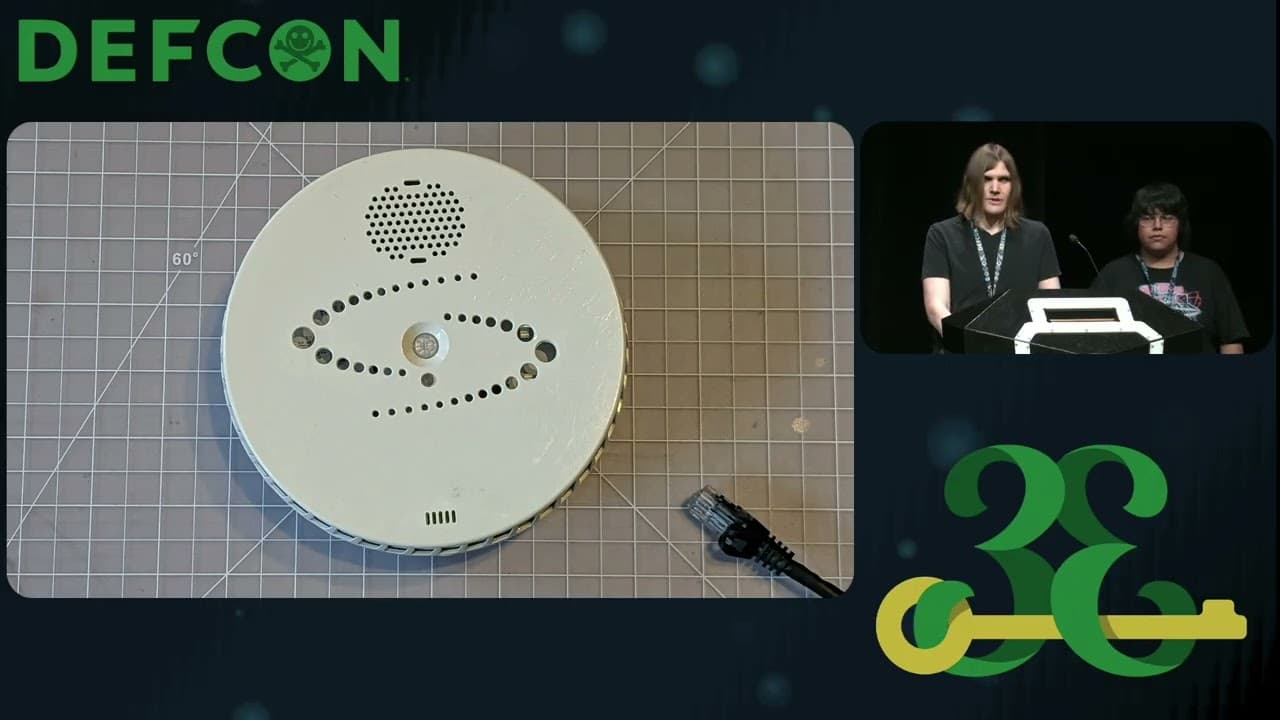
Unmasking the Snitch Puck: The Creepy IoT Surveillance Tech in the School Bathroom
Anyone Can Hack IoT: A Beginner's Guide to Hacking Your First IoT Device