Siri-ously Leaky: Exploring Overlooked Attack Surfaces Across Apple's Ecosystem
This talk demonstrates several vulnerabilities in Apple's ecosystem, including unauthorized data access via Siri, lock screen bypasses, and email spoofing techniques. The researcher highlights how improper trust boundaries between system components and applications like Siri, Shortcuts, and Contacts can lead to significant information disclosure. These findings emphasize the risks of logic flaws in high-trust components and the importance of context-aware security controls. The presentation includes multiple proof-of-concept demonstrations targeting iOS and iPadOS.
Bypassing iOS Lock Screens and Spoofing Contacts via Logic Flaws
TLDR: Recent research into Apple’s ecosystem reveals how improper trust boundaries between Siri, Shortcuts, and system apps allow attackers to bypass lock screens and manipulate contact data. By exploiting logic flaws in how these components handle intent-based requests, an attacker can access sensitive information or spoof identities without authentication. Security researchers should prioritize testing inter-app communication channels and intent-based workflows to identify similar vulnerabilities in mobile environments.
Mobile security often focuses on memory corruption or kernel exploits, but the most dangerous vulnerabilities are frequently found in the logic governing how system components trust one another. The research presented at DEF CON 2025 regarding Apple’s ecosystem is a masterclass in identifying these "trust boundary" failures. When high-trust components like Siri or the Shortcuts app make assumptions about the security context of a request, they inadvertently open doors for attackers to perform actions that should be strictly gated behind authentication.
The Mechanics of Trust Boundary Failures
The core issue identified in this research is that Apple’s system components often treat intent-based requests as inherently trusted, even when they originate from a locked state. In the case of CVE-2024-44235, the researcher demonstrated that the Spotlight search functionality on a locked device could be coerced into revealing sensitive data from apps like Notes or Pages.
The attack flow relies on the fact that the system allows certain queries to be processed by the search daemon even when the device is locked. By crafting specific inputs, the researcher triggered a race condition where the system would render a thumbnail or preview of a file before the authentication check fully locked the interface. This is a classic example of a Broken Access Control vulnerability, where the system fails to enforce the "locked" state across all UI rendering paths.
Exploiting Intent-Based Workflows
Another significant finding involves the manipulation of contact data, specifically CVE-2025-24225. This vulnerability highlights how the Contacts app handles email addressing according to RFC 5322. The standard allows for a display name followed by an email address in angle brackets. The researcher discovered that by injecting specific characters or manipulating the display name field with excessive whitespace, they could trick the system into misinterpreting the actual recipient of an email.
When a user shares a contact card, the underlying logic fails to sanitize the input properly. An attacker can create a contact card where the display name looks like a legitimate contact, but the actual email address in the angle brackets points to a malicious destination. Because the UI truncates the display, the victim never sees the true destination. This is a powerful social engineering vector that turns a standard feature into a reliable spoofing mechanism.
The Role of Unicode and RTL Overrides
One of the most elegant techniques discussed involves the use of the Right-to-Left (RTL) override character, U+202E. By embedding this character in a filename, an attacker can visually reverse the extension of a file. For example, a file named pikachu.pdf can be renamed to pikachu.fdp.mobileconfig using the override.
On iOS, the Files app renders the filename based on the RTL override, making the file appear as pikachu.pdf to the user, while the system treats it as a configuration profile. When the user taps the file, they believe they are opening a document, but they are actually triggering a system-level action. This technique is particularly effective because it exploits the gap between how the human eye parses text and how the operating system parses file metadata.
Real-World Implications for Pentesters
For those conducting mobile application security assessments, these findings shift the focus from traditional binary exploitation to the "glue" that holds the OS together. During an engagement, you should map out how different applications interact via the Intents framework. Ask yourself:
- What data is exposed to the search index?
- Can I trigger an action in a background app from a locked state?
- How does the app handle input that deviates from the expected format, such as Unicode characters or excessive whitespace?
The impact of these bugs is significant. They allow for unauthorized information disclosure and identity spoofing, which are critical in a corporate environment where mobile devices are often the primary gateway to internal resources.
Defensive Strategies
Defending against these logic-based attacks requires a shift toward context-aware security. Developers must ensure that every request, regardless of its origin, is validated against the current security context of the device. If a component is in a "locked" state, it must strictly limit the data it returns to the search index and the actions it allows via the Shortcuts app.
Furthermore, UI components should be designed to display the full, un-sanitized path of any sensitive data, such as email addresses or file extensions, to prevent spoofing. Relying on the OS to handle sanitization is insufficient, as demonstrated by the fact that these vulnerabilities persisted across multiple versions of iOS.
Security is not just about permissions; it is about the context in which those permissions are exercised. As mobile operating systems become more integrated, the complexity of these inter-app relationships will only increase, providing a fertile ground for researchers who look beyond the surface.
Vulnerability Classes
Tools Used
Target Technologies
Attack Techniques
All Tags
Up Next From This Conference
DisguiseDelimit: Exploiting Synology NAS with Delimiters and Novel Tricks
Browser Extension Clickjacking: One Click and Your Credit Card Is Stolen
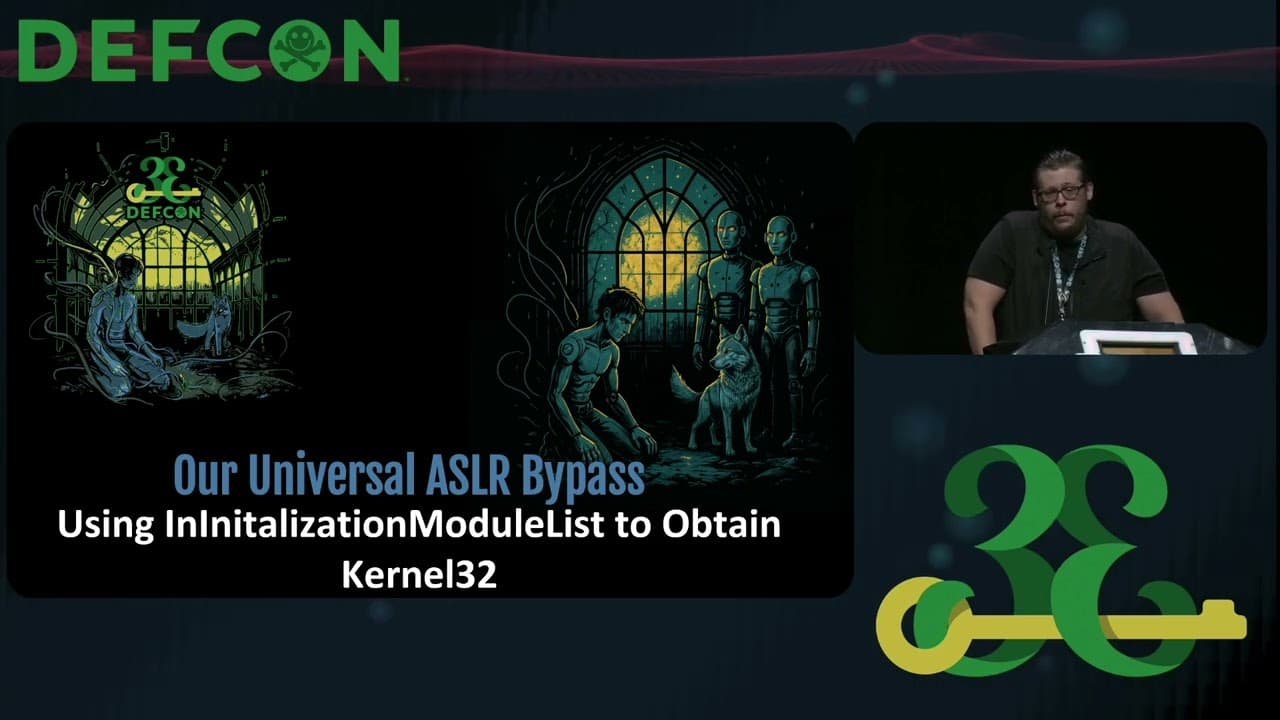
Can't Stop the ROP: Automating Universal ASLR Bypasses for Windows
Similar Talks
Inside the FBI's Secret Encrypted Phone Company 'Anom'
Kill List: Hacking an Assassination Site on the Dark Web