The Dark Side of Bug Bounty
This talk explores the systemic issues and ethical challenges within the bug bounty ecosystem, specifically focusing on the exploitation of researchers by platforms and clients. It highlights how AI-driven threat intelligence, cloud-based WAFs, and unfair triage practices are used to devalue and mismanage vulnerability reports. The speaker provides actionable advice for researchers to protect their work, improve report quality, and navigate the power dynamics of bug bounty programs.
How Bug Bounty Platforms Are Monetizing Your Research Without Paying You
TLDR: Bug bounty platforms are increasingly using researcher-submitted traffic to train proprietary AI models and build automated vulnerability scanners. This practice effectively turns your hard-earned zero-day research into a product for the platform, often without providing you with any additional compensation. Researchers must now be more strategic about how they submit findings and how they communicate with platforms to protect the value of their work.
The bug bounty ecosystem has shifted. What started as a meritocratic way for researchers to get paid for finding bugs has morphed into a data-mining operation for the platforms themselves. If you are a researcher, you are likely already aware of the friction in the triage process, but the real issue is what happens to your data after you hit submit. Platforms are taking your attack traffic, your payloads, and your research methodology to train AI models and build threat intelligence feeds. They sell these services to their enterprise clients, effectively turning your labor into a recurring revenue stream for them, while you get paid exactly once for the initial finding.
The AI Training Pipeline
When you submit a high-quality report, you are providing the platform with a perfect training set. You have already done the heavy lifting of identifying the vulnerability, crafting the exploit, and proving the impact. Platforms are now using this data to train AI models that can automatically detect similar patterns across their entire customer base.
This is not just about efficiency. It is about the platform building a defensive product that renders your future research on those same targets obsolete. If a platform uses your payload to train a scanner that catches that class of bug automatically, you lose the ability to find and report that bug again. You are essentially training your own replacement.
This is particularly problematic when you consider the OWASP Top 10 categories like Injection or Broken Access Control. Once a platform has enough examples of how these are exploited in a specific environment, they can automate the detection. If you want to see how these platforms are positioning their automated tools, look at the official documentation for major platforms; they are increasingly emphasizing "managed" and "automated" services that rely on the collective intelligence of the researcher community.
The Cloud WAF Surveillance State
Beyond AI training, there is the issue of cloud-based Web Application Firewalls (WAFs). These vendors are monitoring the traffic of the top-tier researchers on their platforms. When you are testing a target, your IP address and your custom headers are often being logged and analyzed in real-time.
If you are using a tool like Burp Suite to test an application, the WAF is watching your every move. They are not just blocking your attacks; they are learning from them. They see your unique payloads and your specific approach to T1190-exploit-public-facing-app and they update their rule sets accordingly.
This creates a massive power imbalance. You are working in the open, while the platform and the WAF vendor are working in the dark. They have the visibility into the entire attack surface, and they are using that visibility to protect their clients at your expense.
Strategic Submission and Communication
You need to change how you interact with these programs. If you find a critical vulnerability, do not just dump the entire exploit chain into the report immediately. Provide enough information to prove the bug, but keep the most sophisticated parts of your methodology to yourself until you have a clear understanding of how the platform handles your data.
When you are dealing with triage, be precise. If you are using CVSS 4.0 to justify your impact, do not leave it to the triage team to interpret. Pre-provide the justification. If you leave the scoring to them, they will almost always default to the lowest possible rating to save the client money or to keep the bug within a specific budget bucket.
If you are working on a bug that could impact compliance, such as PCI DSS or SOC2, explicitly mention it. A bug that is "out of scope" or "low impact" suddenly becomes a high-priority issue when it is framed as a compliance failure.
The Future of Researcher Autonomy
We are the product. Without the researchers, these platforms are just empty websites. If they want to continue to benefit from our work, they need to be more transparent about how they use our data. We should be demanding more visibility into how our reports are being used to train their internal tools.
If a platform refuses to pay for a bug because they claim it is "out of scope" or "not applicable," but then they turn around and use your research to patch that same vulnerability across their entire client base, that is a breach of the implicit trust in the bug bounty contract.
Start documenting your interactions. If you find that your research is being used to build automated scanners without your consent, you have the right to take your talent elsewhere. There are plenty of companies that run their own internal programs and are willing to work directly with researchers. The goal is to find programs that value your expertise rather than just your data. Keep your research sharp, keep your communication professional, and never forget that your skills are the most valuable asset in this entire industry.
Vulnerability Classes
Tools Used
Target Technologies
Attack Techniques
OWASP Categories
All Tags
Up Next From This Conference
Breaking Secure Web Gateways for Fun and Profit
Listen to the Whispers: Web Timing Attacks That Actually Work
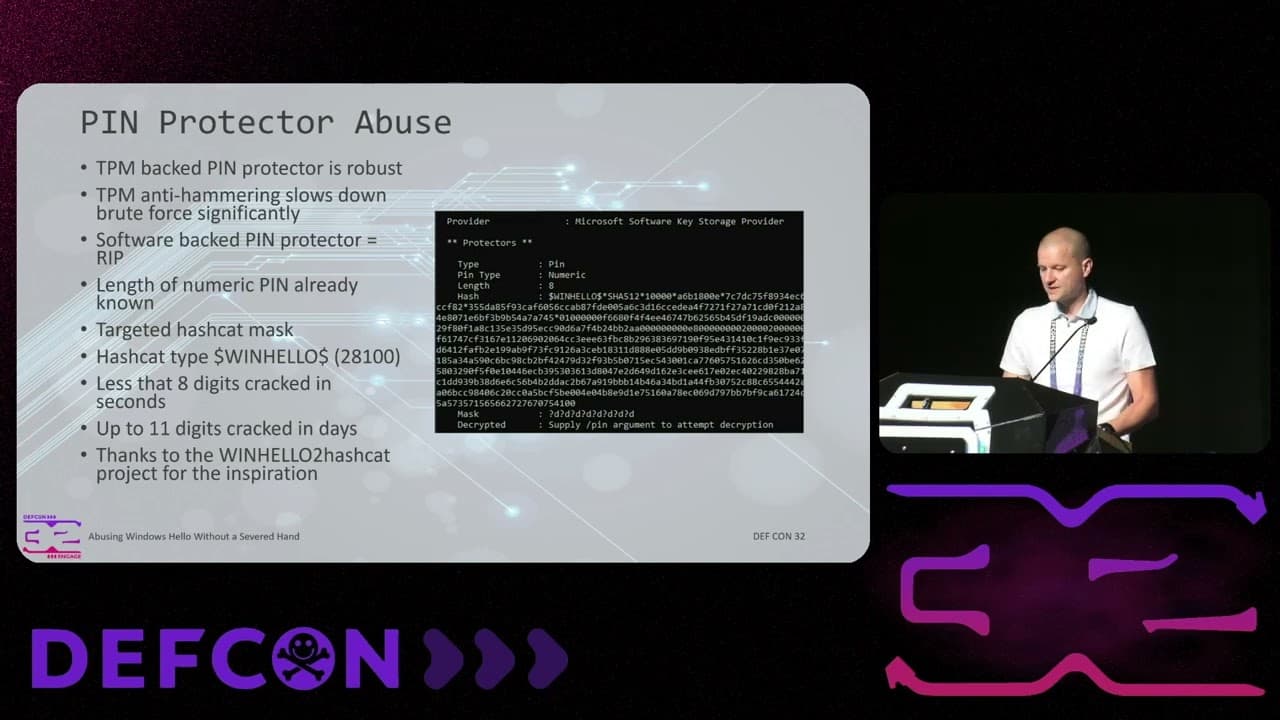
Abusing Windows Hello Without a Severed Hand
Similar Talks
Kill List: Hacking an Assassination Site on the Dark Web
Anyone Can Hack IoT: A Beginner's Guide to Hacking Your First IoT Device