The Pwnie Awards 2024
The Pwnie Awards 2024 ceremony recognizes significant achievements and failures in the cybersecurity industry, highlighting critical vulnerabilities and research. The presentation covers a range of topics including cryptographic attacks, desktop and mobile vulnerabilities, and remote code execution exploits. It serves as a retrospective on the most impactful security research and notable industry blunders from the past year.
The Pwnie Awards 2024: A Masterclass in Modern Exploit Chains
TLDR: The 2024 Pwnie Awards highlighted a shift toward complex, multi-stage exploit chains that bypass modern hardware and software mitigations. From memory corruption in the Windows kernel to sophisticated sandbox escapes in Chrome, the research shows that attackers are increasingly targeting the seams between hardware features and OS-level security. Pentesters should prioritize auditing these complex interfaces rather than relying on legacy vulnerability scanning.
Security research is rarely about finding a single, clean bug anymore. The 2024 Pwnie Awards made this abundantly clear. The winning research didn't just find a buffer overflow; it chained together multiple primitives to bypass hardware-backed mitigations like MTE or to escape hardened sandboxes. For those of us in the field, this is the new baseline. If you are still looking for low-hanging fruit, you are missing the real action.
The Death of the Single-Bug Exploit
The research recognized at this year's ceremony, particularly the work on CVE-2023-6241 and the XZ Utils backdoor, demonstrates that modern exploitation is an exercise in persistence and architectural understanding. The XZ backdoor, discovered by Andres Freund, was a masterclass in supply chain compromise. It wasn't just a malicious commit; it was a multi-stage payload that hooked into the SSH authentication process, effectively creating a stealthy, remote-accessible backdoor.
When we look at CVE-2023-23420, a memory corruption vulnerability in the Windows Registry, we see how attackers are turning administrative interfaces into kernel-level attack vectors. By manipulating how the registry handles specific data structures, researchers were able to gain a window into kernel memory. This is not just a bug; it is a fundamental breakdown in the isolation between user-mode configuration and kernel-mode execution.
Why Hardware-Assisted Mitigations Are Not Silver Bullets
One of the most compelling pieces of research highlighted was the work on MTE-enabled devices. We often hear that hardware-assisted memory tagging will solve our memory corruption problems. The reality is more nuanced. Attackers are finding ways to use side-channel attacks to leak information, even when the memory itself is protected.
The research on CVE-2024-30080, a pre-authentication remote code execution vulnerability in Microsoft Exchange, serves as a reminder that even the most "hardened" enterprise software is still vulnerable to logic flaws. The vulnerability allowed an attacker to bypass authentication entirely. When you combine this with the fact that Exchange is often the most critical, internet-facing asset in an organization, the impact is catastrophic.
For those of us performing red team engagements, the lesson is clear: stop treating the network perimeter as the only boundary. The real boundaries are now defined by the complex interactions between drivers, kernel services, and hardware features. If you are not auditing the communication protocols between these layers, you are not doing a full assessment.
Practical Takeaways for the Field
If you want to find bugs that matter, you need to move beyond the standard OWASP Top 10 checklist. While injection and broken access control remain relevant, the most impactful research is happening in the "gray space" of system architecture.
- Audit the Interfaces: Look at where user-mode applications interact with kernel-mode drivers. These interfaces are often poorly documented and rarely audited with the same rigor as web APIs.
- Understand the Hardware: Learn how your target's hardware handles memory management. If you are testing mobile devices, understand the specific ARM architecture and how it implements features like MTE or pointer authentication.
- Chain Your Primitives: A single bug is rarely enough to achieve full system compromise. Start thinking about how you can chain a small information leak with a logic flaw to achieve a more significant impact.
Defensive Reality Check
Defenders are in a tough spot. You cannot patch your way out of architectural flaws. The best defense is to reduce the attack surface by disabling unnecessary services and implementing strict least-privilege policies. If a service does not need to interact with the kernel, ensure it is running in a highly restricted container or sandbox.
The Pwnie Awards are not just about celebrating the "pwn." They are about identifying the trends that will define the next year of security research. The industry is moving toward more complex, hardware-aware exploitation. If you are not keeping up with these developments, you are already behind. Start digging into the kernel, start looking at the hardware, and start building your own exploit chains. The next big vulnerability is likely hiding in the complexity you have been ignoring.
Vulnerability Classes
Target Technologies
Attack Techniques
All Tags
Up Next From This Conference
Breaking Secure Web Gateways for Fun and Profit
Listen to the Whispers: Web Timing Attacks That Actually Work
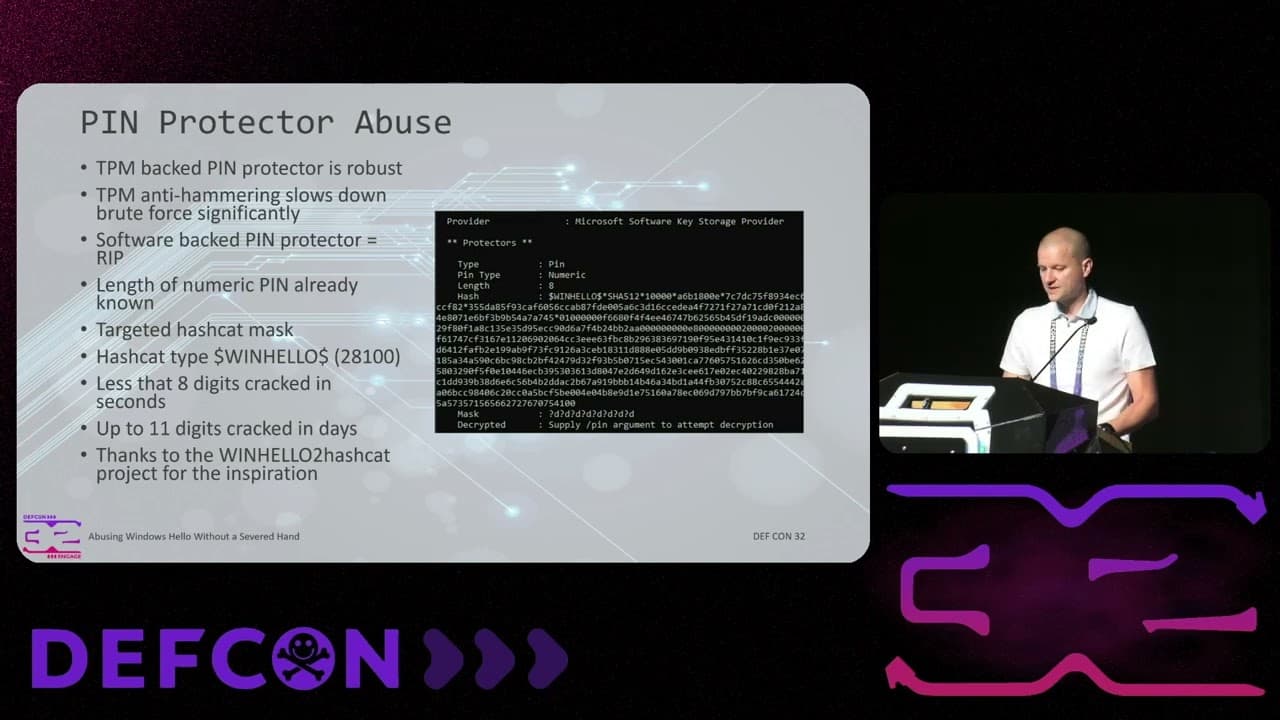
Abusing Windows Hello Without a Severed Hand
Similar Talks
Inside the FBI's Secret Encrypted Phone Company 'Anom'

Kill List: Hacking an Assassination Site on the Dark Web