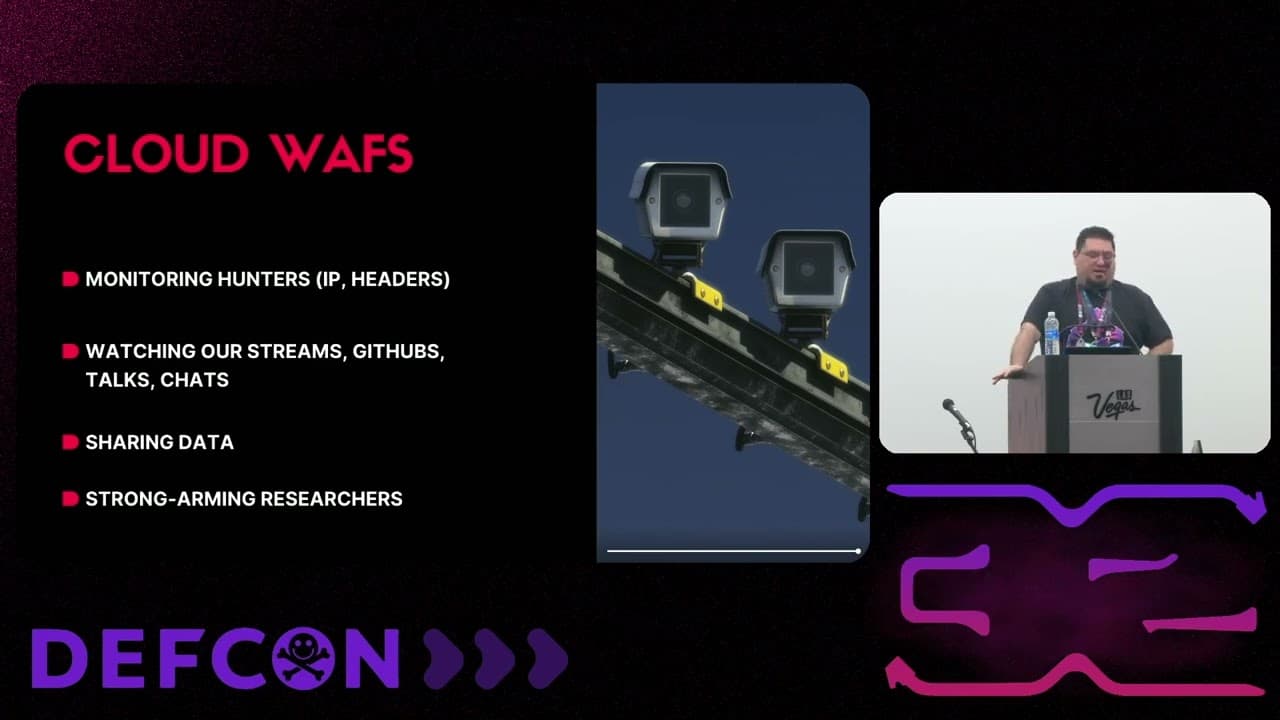
Through the Looking Glass: How Open Source Projects See Vulnerability Disclosure
This talk analyzes the common friction points and communication gaps between security researchers and open-source project maintainers during the vulnerability disclosure process. It explores the diverse responses researchers receive, ranging from dismissals to requests for patches, and identifies the underlying causes such as lack of security training and resource constraints. The presentation provides actionable recommendations for researchers to improve the quality of their reports and for maintainers to better manage the disclosure lifecycle. The speaker highlights the importance of clear, reproducible reports and the adoption of standardized security practices like SECURITY.md files.
Why Your Vulnerability Reports Are Getting Ignored by Open Source Maintainers
TLDR: Security researchers often struggle to get their vulnerability reports accepted by open-source projects due to communication gaps and a lack of standardized disclosure processes. This post breaks down why maintainers dismiss reports, how to structure your findings to ensure they are taken seriously, and why adopting SECURITY.md files is the industry standard for fixing this friction. If you want your bug bounty submissions to be triaged faster, stop treating maintainers like corporate support desks and start speaking their language.
Most security researchers treat open-source projects like a bug bounty program run by a faceless corporation. You find a crash, you fire off a report, and you expect a response within 48 hours. When you get a generic "this is not a security issue" or total silence, you assume the project is negligent. The reality is that you are likely failing to account for the human and operational constraints of the people on the other side of that screen.
The Anatomy of a Rejected Report
Maintainers of open-source projects are often overworked, underfunded, and juggling a massive backlog of feature requests. When a report lands in their inbox, it is rarely the only thing they are looking at. If your report is vague, lacks a clear reproduction path, or uses jargon that assumes they have the same offensive security background as you, it is going to be deprioritized.
The most common reason for a dismissal is a lack of clarity regarding the attack scenario. If you report a crash but fail to explain how an attacker can reach that code path in a real-world deployment, the maintainer will view it as a theoretical bug rather than a security vulnerability. They are not looking for a PoC that requires a specific, non-default configuration; they are looking for a reason to care.
How to Get Your Findings Triaged
If you want your report to be bookmarked and fixed, you need to treat the maintainer as a collaborator, not a target. Start by checking if the project has a SECURITY.md file in their repository. This file is the primary interface for disclosure. If it exists, follow the instructions to the letter. If it does not, you are already operating in the dark.
Your report must include three things:
- A clear, concise description of the issue.
- A step-by-step guide on how to reproduce the crash or exploit.
- A realistic attack scenario that explains why this matters to their users.
Avoid using security-specific dialect. If you are talking to a developer who has never had formal security training, terms like "Red Team" or "threat actor" are just noise. Instead, explain the impact in terms of the software's functionality. If the bug causes a crash, explain what service or process goes down. If it leads to data exposure, explain exactly what data is leaked and how.
The Reality of Unmaintained Code
Sometimes, the issue you found is in a component that hasn't been touched in years. You might be reporting a vulnerability in a library that the maintainers barely understand themselves. In these cases, the "this is not a security issue" response is often a polite way of saying they don't have the resources to fix it.
When you encounter this, your best bet is to provide a fix yourself. If you care enough to report it, you should care enough to submit a pull request. A well-written patch that addresses the vulnerability is significantly harder to ignore than a bug report. It removes the burden of work from the maintainer and demonstrates that you are invested in the project's health.
Bridging the Gap
The friction between researchers and maintainers is a systemic problem, but it is one that can be managed with better communication. Projects that have migrated their security reporting from legacy systems like Bugzilla to modern platforms like GitHub or GitLab generally see higher engagement. These platforms provide better tooling for tracking issues and managing the disclosure lifecycle.
If you are a researcher, stop assuming that every bug is a critical vulnerability. If you are a maintainer, stop assuming that every report is a waste of time. The goal of a disclosure is to improve the security of the software, not to win an argument. By providing clear, reproducible reports and respecting the constraints of the project team, you increase the likelihood that your findings will be addressed.
Next time you find a bug, take five minutes to research the project's preferred disclosure method. If they don't have one, suggest they add a security policy. A little bit of empathy for the maintainer goes a long way in getting your work recognized and, more importantly, getting the vulnerability fixed.
Target Technologies
All Tags
Up Next From This Conference
A Security RISC? The State of Microarchitectural Attacks on RISC-V

REDIScovering HeadCrab: A Technical Analysis of a Novel Malware and the Mind Behind It

TsuKing: Coordinating DNS Resolvers and Queries into Potent DDoS Amplifiers
Similar Talks
Anyone Can Hack IoT: A Beginner's Guide to Hacking Your First IoT Device
Cracking the Lens: Exploiting HTTP's Hidden Attack Surface