CISO Series Podcast: Live at BSides San Francisco
This video is a live recording of the CISO Series Podcast featuring a panel discussion on cybersecurity leadership, career development, and industry trends. The speakers discuss the challenges of hiring and training cybersecurity professionals, the importance of incident response, and the role of automation in security operations. The discussion also touches on the use of AI in security and the importance of supply chain security. The video is a non-technical, industry-focused discussion and does not contain any technical demonstrations or vulnerability research.
Beyond the Resume: Why Your Next Security Hire Needs to Break Systems
TLDR: Hiring for cybersecurity roles often relies on outdated metrics like certifications or traditional IT backgrounds, which fail to identify the "insurgent" mindset required for modern defense. True security talent is found in candidates who demonstrate a natural curiosity for breaking systems and a capacity to handle high-pressure crises. Organizations should shift their focus toward identifying these adjacent skills rather than filtering for specific, narrow technical pedigrees.
The industry is obsessed with the "entry-level" cybersecurity role. We see endless job postings requiring three to five years of experience for a junior position, coupled with a laundry list of certifications that prove nothing more than a candidate’s ability to memorize multiple-choice answers. This approach is fundamentally broken. If you are a hiring manager or a lead researcher building a team, you are likely filtering out the exact people you need: the ones who don't have a traditional background but possess the raw, innate drive to dismantle complex systems.
The Shift from Entry-Level to Insertion-Level
We need to stop thinking about cybersecurity as an entry-level career path and start viewing it as an insertion-level discipline. The best researchers and red teamers I have worked with over the last 15 years did not start by taking a course on OWASP Top 10. They started by breaking things that weren't supposed to be broken.
When you interview a candidate, the most important question isn't whether they can explain the difference between symmetric and asymmetric encryption. It is whether they have a history of finding the edge cases in a system. Do they like to break things? And I do not mean breaking computer systems in a lab environment. I mean the person who, when presented with a flawed policy or a broken process, immediately asks, "How do I beat this?"
This is the "insurgent" mindset. It is the same instinct that drives a bug bounty hunter to look at a login page and immediately start testing for SQL injection or Cross-Site Scripting because they refuse to accept the system's intended flow. If you can find people who apply this logic to business processes, you have found a future security leader.
Identifying the Right Signals
How do you spot this in a sea of resumes? You look for the "adjacent" skills. A candidate with a background in journalism, for example, might be the perfect addition to a research team. Why? Because they know how to investigate, how to synthesize complex information, and how to tell a story. If you are writing a research report on a new CVE, you don't just need a coder; you need someone who can articulate the risk to stakeholders who don't care about the technical weeds.
Ask your candidates about the last crisis they faced. It doesn't have to be a cyber incident. Maybe they were late for a meeting because they made a mistake, or maybe they had to manage a personal emergency while juggling professional responsibilities. The "how" matters more than the "what." Did they panic, or did they triage? Did they look for a workaround, or did they wait for instructions?
A security professional who can survive chaos is worth ten who can only operate in a perfectly configured lab. We are in an industry where the threat landscape shifts daily. If your team members cannot adapt to the unexpected, your security program is already failing.
The Danger of Over-Reliance on AI and Automation
There is a growing trend of using AI to automate the "boring" parts of security. While tools like Nmap or automated scanners are essential for efficiency, they are not a substitute for human intuition. I see too many teams relying on AI to generate reports or triage alerts, effectively outsourcing their critical thinking.
When you rely on a tool to tell you what is important, you lose the ability to see what the tool is missing. The most dangerous vulnerabilities are the ones that don't trigger an alert. If your team is only looking at what the dashboard tells them to look at, they are not doing security; they are doing data entry.
Encourage your team to get their hands dirty. If they are using a tool, they should be able to explain exactly what that tool is doing under the hood. If they can't, they aren't using the tool; the tool is using them.
Building a Resilient Team
If you want to build a team that actually moves the needle, stop looking for the perfect resume. Look for the person who has the grit to stick with a problem until it is solved. Look for the person who is constantly learning, not because they have to for a certification, but because they are genuinely curious about how things work.
The next time you have an opening, try a different approach. Give the candidates a real-world problem—not a CTF challenge, but a messy, ambiguous problem that requires them to think critically and communicate effectively. See how they handle the ambiguity. The ones who thrive in that environment are the ones who will help you build a truly resilient organization.
Security is not a product you buy or a checklist you complete. It is a culture of constant, aggressive, and intelligent questioning. If your team isn't asking the hard questions, you aren't as secure as you think you are. Start hiring for the mindset, and the technical skills will follow.
Up Next From This Conference
Similar Talks
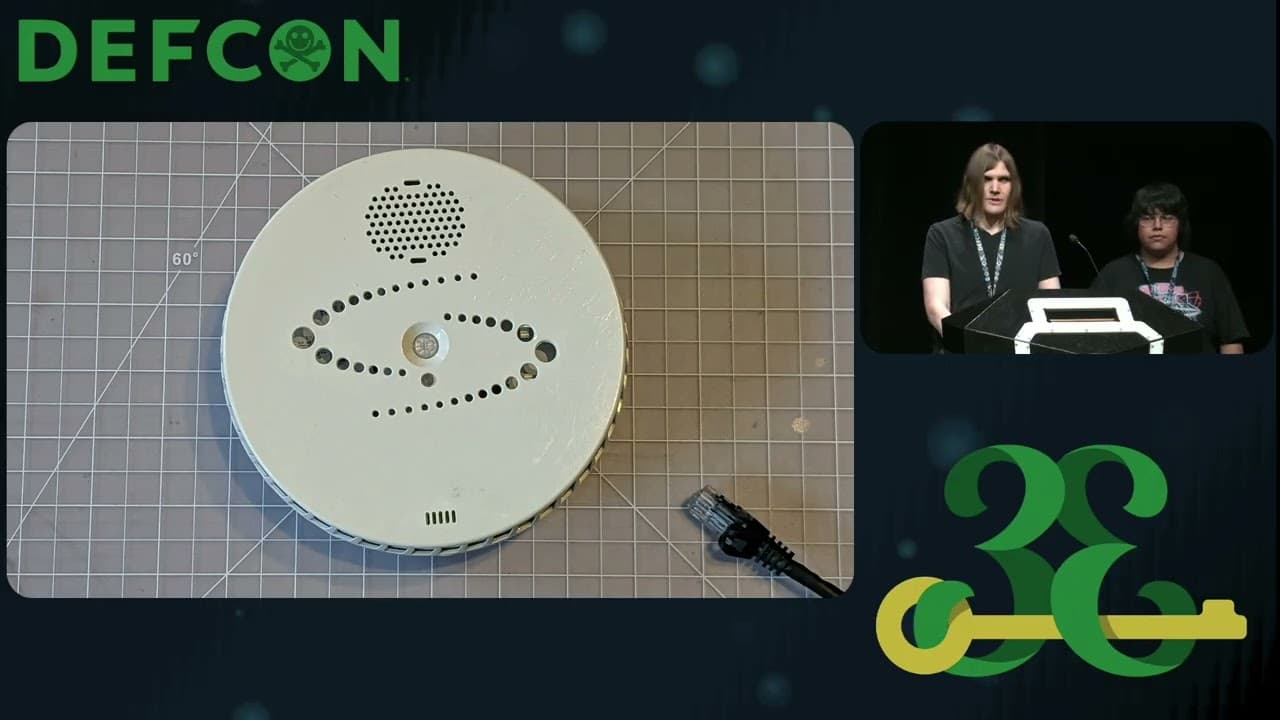
Unmasking the Snitch Puck: The Creepy IoT Surveillance Tech in the School Bathroom
Counter Deception: Defending Yourself in a World Full of Lies