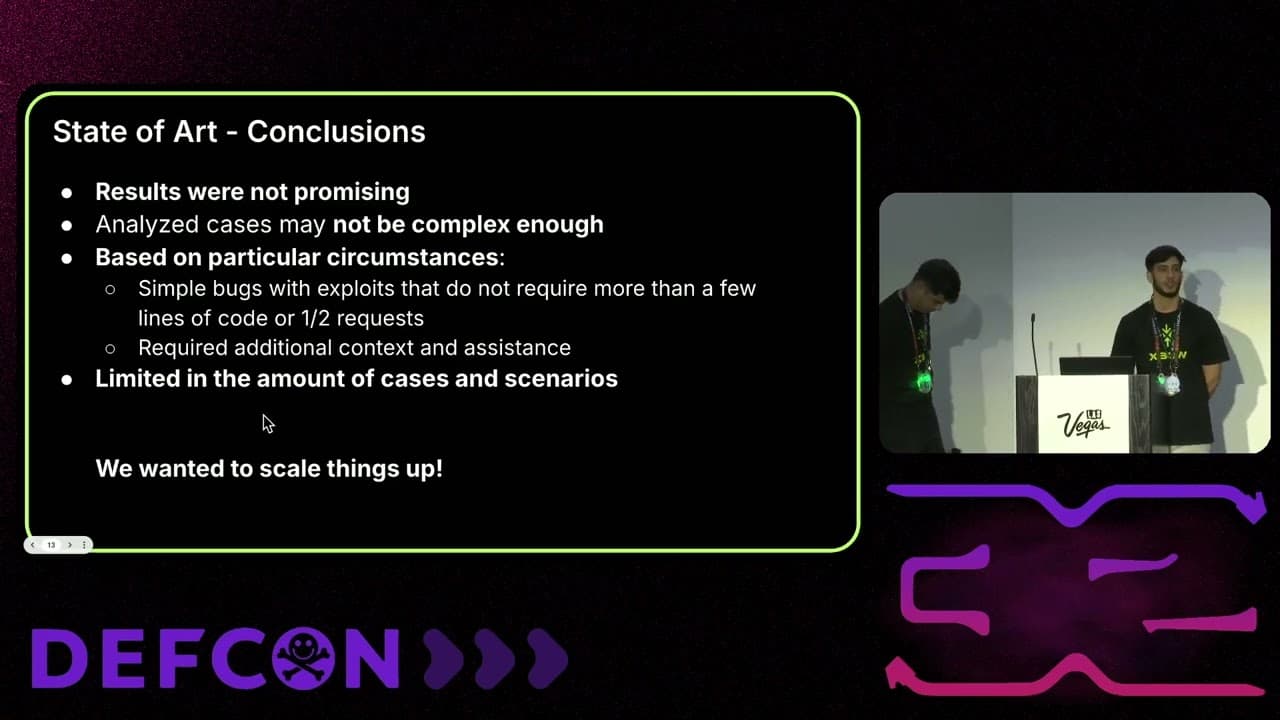
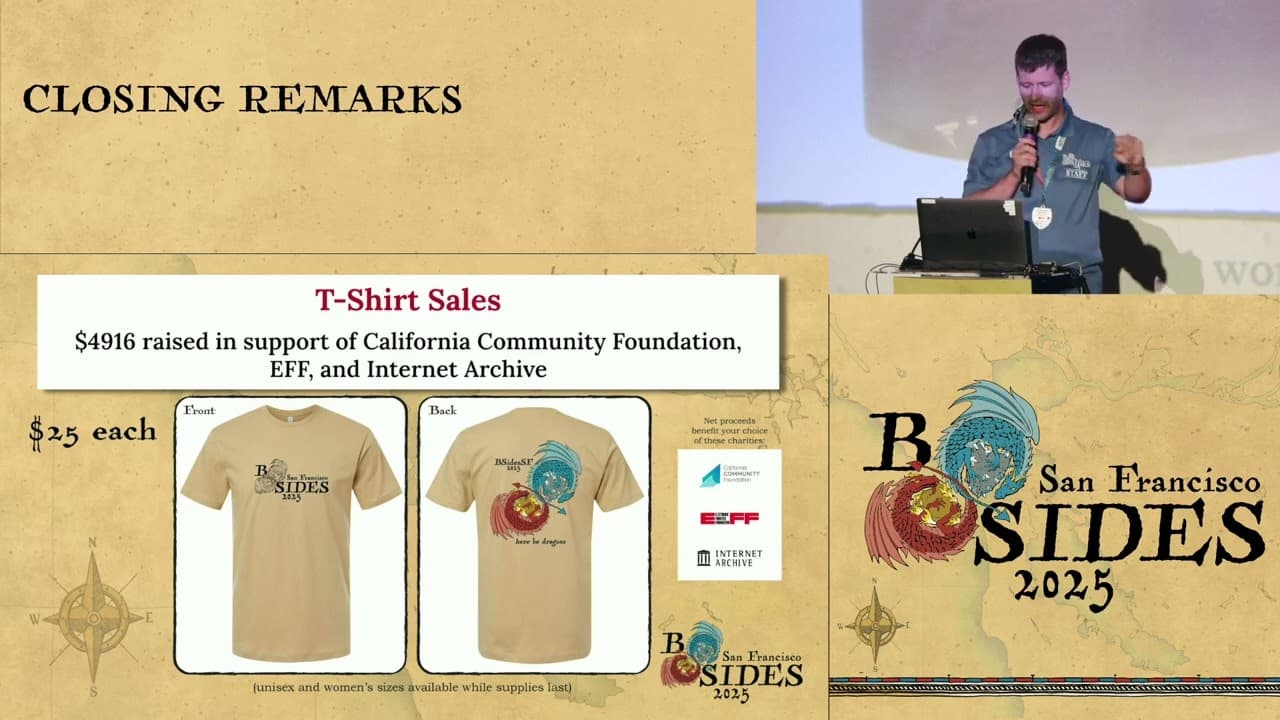
BSides San Francisco 2025 Closing Remarks
This video serves as the closing ceremony for the BSides San Francisco 2025 conference. It provides a high-level overview of event statistics, including attendance numbers, call-for-papers data, and network traffic metrics. The presentation highlights the community-driven nature of the event, acknowledging volunteers, sponsors, and CTF participants.
Beyond the Hype: Why Community-Driven Research Still Beats Corporate Security
TLDR: The recent BSides San Francisco 2025 conference highlighted a shift in the security research landscape, moving away from vendor-led narratives toward community-driven, hands-on experimentation. By analyzing the program statistics and session topics, it is clear that researchers are prioritizing practical, offensive-focused skill sets like blue team operations and web security. This post breaks down why these community-led gatherings are becoming the primary source of actionable intelligence for modern penetration testers and bug bounty hunters.
Security research is currently at a crossroads. On one side, we have the polished, marketing-heavy presentations at major industry conferences that often prioritize product roadmaps over actual vulnerability research. On the other, we have grassroots events like BSides, where the focus remains squarely on the technical "how-to" of breaking systems. The recent data from BSides San Francisco 2025 proves that the community is not just interested in the latest buzzwords; they are hungry for the kind of deep, technical knowledge that actually moves the needle on a penetration test.
The Shift Toward Offensive-Minded Defense
One of the most telling metrics from the 2025 program is the dominance of "Blue Team Operations" and "Web Security" as the top-tier topics. For years, the industry has treated these as separate silos, but the reality of a modern red team engagement is that you cannot effectively compromise a target without a deep understanding of how the blue team is monitoring the environment.
When you look at the OWASP Top 10, it is easy to dismiss it as basic knowledge. However, the research presented this year shows that the implementation of these vulnerabilities in modern, cloud-native architectures is far more complex than a simple SQL injection. We are seeing a surge in research targeting the intersection of cloud infrastructure and application logic, where the misconfiguration of a single IAM role can lead to a full environment compromise. This is where the real work is happening, and it is where the most successful bug bounty hunters are focusing their efforts.
Why Technical Depth Matters More Than Ever
The sheer volume of submissions—363 in total—indicates that researchers are not just finding bugs; they are documenting them with a level of rigor that is often missing from commercial vulnerability reports. The move toward "Deep-Dive" sessions over general talks is a direct response to the increasing complexity of the systems we test.
Consider the way modern authentication flows are being handled. With the rise of WPA3 and more complex OAuth implementations, the attack surface has expanded significantly. Researchers are no longer just looking for hardcoded credentials; they are analyzing the underlying cryptographic protocols and the state machines that govern these authentication processes. If you are a pentester, your ability to map these flows is what separates a successful engagement from one that misses the critical path.
The Practical Reality of Modern Engagements
During the conference, the focus on "Blue Team Operations" was not just theoretical. It was a recognition that the tools we use—whether it is Metasploit or custom-built C2 frameworks—are being detected with increasing frequency. The researchers who are winning in the current environment are those who understand how to blend their traffic with legitimate application behavior.
If you are performing a web application test, you should be looking at how your payloads interact with the underlying WAF and logging infrastructure. Are you triggering alerts that a junior analyst would ignore, or are you blending in with the noise of a standard CI/CD pipeline? The most effective techniques are those that exploit the gap between what a developer thinks is secure and what the infrastructure actually enforces.
Building Your Own Research Pipeline
The most valuable takeaway from this year's event is the importance of building your own research pipeline. The speakers who presented the most impactful research were not relying on vendor-provided documentation. They were building their own labs, fuzzing their own targets, and documenting the edge cases that the automated scanners missed.
If you want to stay ahead, you need to stop treating security research as a passive activity. Start by picking a specific technology stack—whether it is a specific cloud service or a common authentication library—and tear it apart. Use the NVD to track historical vulnerabilities in that stack, but do not stop there. Look for the logic flaws that exist in the implementation, not just the known CVEs.
The community is providing the roadmap, but you have to do the driving. The next time you are on an engagement, look for the "dragons" that everyone else is ignoring. The most critical vulnerabilities are rarely the ones that are being discussed in the main keynote; they are the ones hidden in the complex, undocumented interactions of the systems we rely on every day. Keep your tools sharp, keep your research focused, and do not be afraid to challenge the status quo. The best way to find the next big bug is to stop looking for what everyone else is finding and start looking for what they are afraid to touch.
Up Next From This Conference
Similar Talks
Making and Breaking NSA's Codebreaker Challenge

Bypassing Tunnels: Leaking VPN Client Traffic by Abusing Routing Tables