ChatGPT Assisted Hacking: Pentesting Roku Apps
This talk demonstrates how to use ChatGPT to assist in the security assessment of Roku applications by generating code for proxy configuration and debugging. The research focuses on identifying vulnerabilities in Roku channels, including broken access control and watermark bypass techniques. The speaker highlights the practical application of AI in automating reconnaissance and exploit development for embedded streaming devices.
Bypassing Roku Channel Security with AI-Assisted Proxy Injection
TLDR: Security researchers can effectively audit private Roku channels by using AI to generate the necessary BrightScript modifications for proxy interception. This technique exposes critical flaws like broken access control and client-side watermark bypasses that often go unnoticed in black-box testing. Pentesters should integrate this workflow to gain visibility into the encrypted traffic of embedded streaming applications.
Streaming devices are often treated as black boxes during security assessments. While web and mobile applications get the lion's share of attention, the Roku ecosystem remains a massive, under-audited surface. Most testers assume that because these devices run proprietary firmware and use BrightScript, they are shielded from standard interception techniques. That assumption is a mistake.
The Mechanics of Roku Channel Auditing
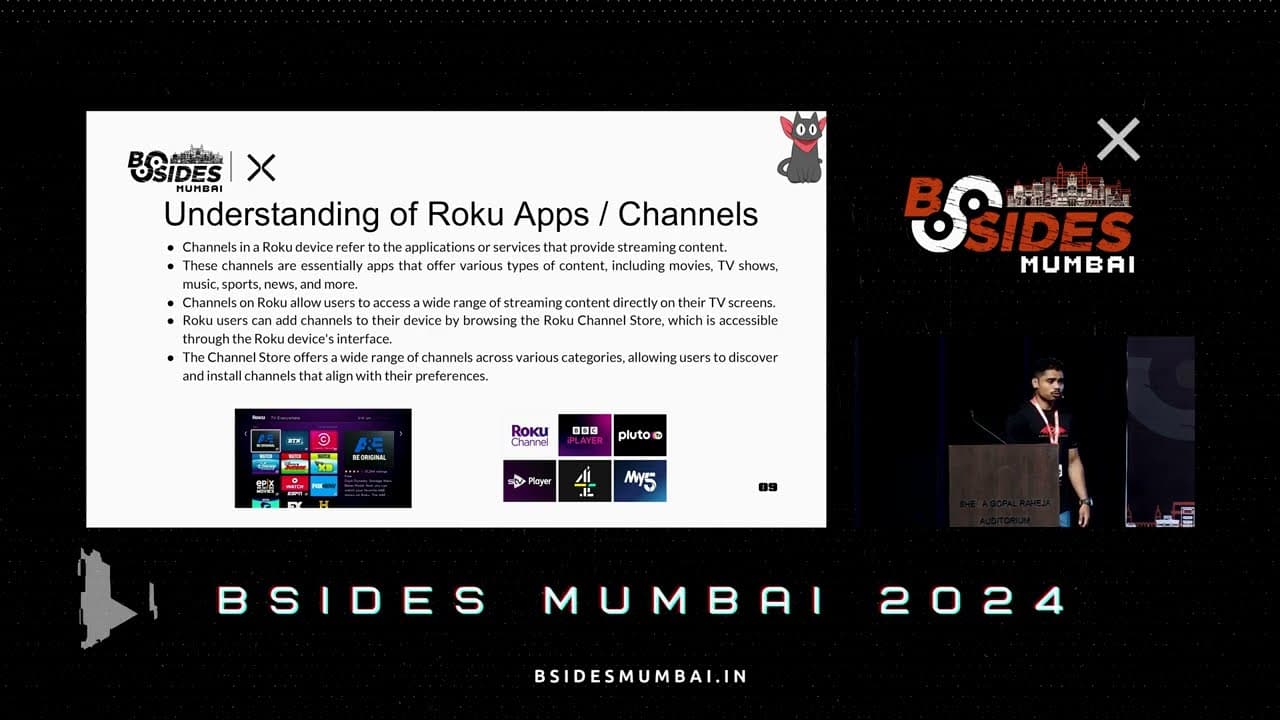
Roku channels are essentially zip archives containing BrightScript code and SceneGraph XML files. When a channel is in development mode, it can be sideloaded onto a device via a web interface. The core challenge for a researcher is that these applications often enforce strict certificate pinning or use custom transport mechanisms that break standard proxy setups.
A recent research effort demonstrated that you do not need to reverse-engineer the entire firmware to gain visibility. Instead, you can modify the channel’s source code to force it to trust your proxy. By using an LLM to generate the specific BrightScript snippets required to inject a CA certificate and redirect traffic, you can bypass the default security controls of the channel.
The process involves three distinct phases: setting up a transparent interception environment, modifying the channel’s main.brs file to include your proxy configuration, and sideloading the modified package.
Injecting the Proxy Configuration
To intercept traffic, you must first ensure the Roku device routes its requests through your machine. Using a tool like create_ap allows you to turn a Linux machine into a Wi-Fi access point, effectively creating a man-in-the-middle position. Once the device is connected, you need to modify the application to accept your proxy’s certificate.
In BrightScript, the roURLTransfer object handles HTTP requests. By default, it will reject connections that do not match the expected certificate chain. You can override this by adding the following logic to your main.brs file:
transfer = CreateObject("roURLTransfer")
transfer.SetCertificatesFile("pkg:/certs/burp-cert.pem")
transfer.SetPort(8080)
transfer.SetUrl("https://example.com")
s = transfer.GetAsString()
This snippet forces the application to use your Burp Suite certificate. If the channel is not performing rigorous server-side validation, this simple modification is enough to decrypt the traffic. The beauty of this approach is that it turns a closed, proprietary environment into a standard web-testing target.
Identifying Broken Access Control
Once the traffic is flowing through your proxy, the standard OWASP A01:2021-Broken Access Control vulnerabilities become immediately visible. During the assessment, researchers found that many channels rely on the client to enforce subscription status.
In one instance, the application checked for a valid subscription by inspecting a parameter in the API response. By simply intercepting the response and modifying the boolean flag, the researcher was able to access premium content without a valid account. Another common finding is the failure to properly burn watermarks into video streams. If the watermark is applied client-side or controlled via a request parameter, it can be stripped or bypassed entirely, allowing for unauthorized recording and redistribution of content.
Debugging and Reconnaissance
Beyond traffic interception, the Roku debug console is a goldmine for sensitive information. By connecting to the device via Telnet on port 8085, you can view real-time logs generated by the application. Developers often leave debug statements in production code that leak JWT tokens, hardcoded API keys, and internal user identifiers.
This is where the "AI-assisted" part of the research shines. When you encounter an unfamiliar API structure or a complex BrightScript object, feeding the code into an LLM can help you identify the exact functions responsible for authentication and data handling. It accelerates the reconnaissance phase, allowing you to focus on the business logic flaws rather than spending hours parsing documentation for a language that is not widely used outside of the Roku platform.
Defensive Considerations for Developers
For those building these channels, the primary takeaway is that client-side security is an illusion. If your channel relies on the device to hide content or verify user identity, you have already lost. All authorization checks must occur on the server. Furthermore, ensure that your application uses robust certificate pinning that cannot be easily bypassed by modifying a local file in the package.
If you are a pentester, stop treating Roku devices as out-of-scope or too difficult to test. The barrier to entry is lower than you think. The next time you are tasked with an IoT engagement, grab a Roku device, set up your access point, and start looking at the traffic. You will likely find that the security model is far more fragile than the vendor intended. The combination of manual proxying and AI-assisted code analysis is currently the most efficient way to map out these hidden attack surfaces. Keep your tools sharp and your focus on the logic, not just the transport layer.
Vulnerability Classes
Target Technologies
Attack Techniques
🔒 BSides Mumbai 2024 - The Ultimate Cybersecurity Talks & Discussions Playlist! 🔒
Up Next From This Conference

Similar Talks

Kill List: Hacking an Assassination Site on the Dark Web
Unmasking the Snitch Puck: The Creepy IoT Surveillance Tech in the School Bathroom