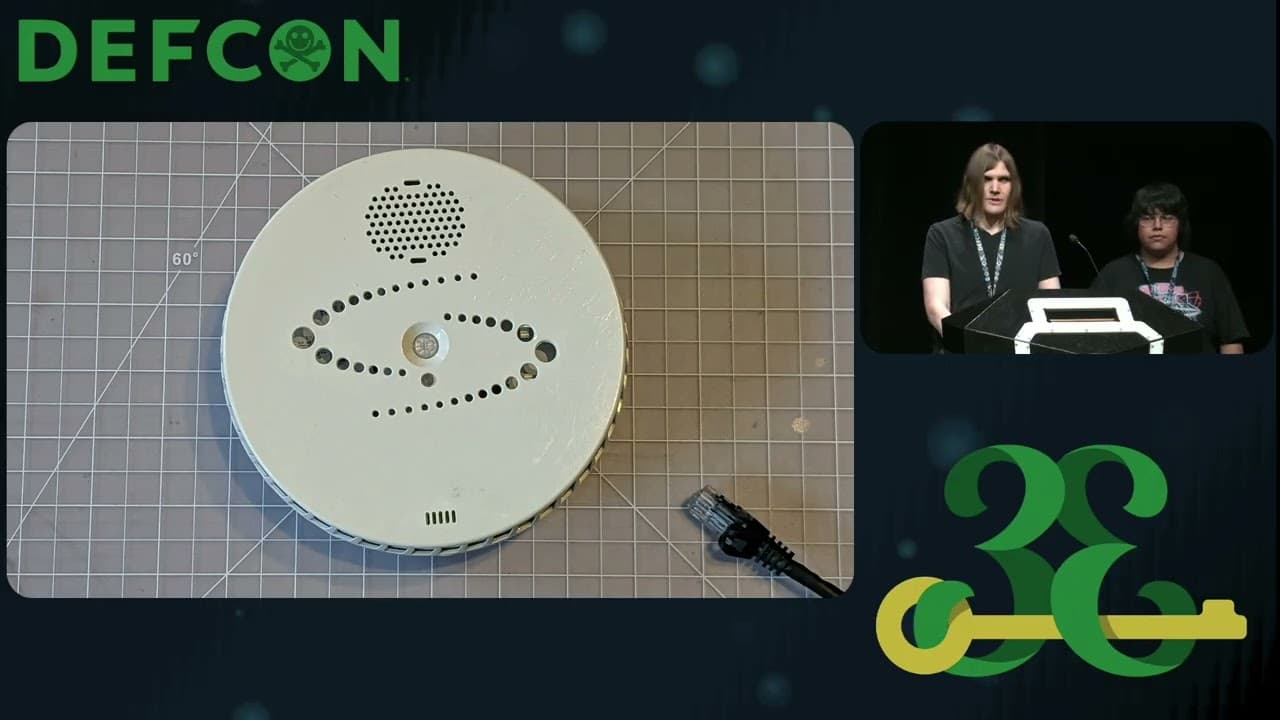
Dark Capabilities: When Tech Companies Become Threat Actors
This talk explores the potential for large technology corporations to act as threat actors by leveraging their existing infrastructure, data access, and product ecosystems for offensive cyber operations. It analyzes how companies can perform surveillance, data exfiltration, and physical disruption through seemingly benign consumer products like smart lightbulbs and robotic vacuums. The presentation introduces a framework for red teaming corporate capabilities to identify and mitigate risks posed by internal, external, and state-coerced misuse of these systems.
The Hidden Offensive Capabilities of Your Smart Home Ecosystem
TLDR: Modern consumer IoT devices like smart lightbulbs and robotic vacuums are not just convenience tools; they are sophisticated sensor platforms capable of surveillance, data exfiltration, and physical disruption. This research demonstrates how these devices, when integrated into a corporate environment, provide an overlooked attack surface for threat actors to bypass traditional network perimeters. Security researchers and pentesters should incorporate these "dark capabilities" into their threat models, as they represent a significant, often unmonitored, vector for lateral movement and data theft.
Most security professionals treat IoT devices as a nuisance—a collection of poorly secured endpoints that need to be segmented on a separate VLAN. We rarely consider that these devices are, by design, sophisticated sensor arrays with persistent network connectivity and high-level permissions within our environments. When we look at the OWASP IoT Top 10, we focus on weak passwords or lack of encryption. We ignore the fact that the device itself is a feature-complete surveillance tool that is already authorized to map our homes, listen to our conversations, and interact with our local networks.
Beyond the Spec Sheet
The core of this research centers on the gap between what a product claims to do and what it is technically capable of doing. A smart lightbulb is marketed as a way to automate your home, but it is also a device with a microphone, motion sensors, and the ability to scan for nearby Bluetooth and Wi-Fi signals. If you are a pentester, you are likely looking for vulnerabilities in the firmware or the mobile app. You should instead be looking at the device as an offensive asset.
Consider the robotic vacuum. It is essentially a mobile sensor platform that builds a precise map of your floor plan. If an attacker gains control of this device, they are not just stealing a password; they are gaining a physical map of the target environment, complete with the ability to listen to audio and potentially deploy a physical payload. This is not a theoretical risk. We are seeing an increase in supply chain compromises where malicious code is injected into software updates, turning benign tools into persistent backdoors.
Mapping the Attack Surface
When analyzing these devices, stop looking at the documentation and start looking at the hardware and the data flow. A device that connects to your Wi-Fi and has a mobile app is a potential bridge into your internal network. If the device has a "smart" feature, it likely has a cloud-based backend that you can interact with via API.
For a pentester, the engagement should involve mapping these capabilities. If you are testing a smart home ecosystem, ask yourself:
- What sensors does this device have that are not being used for its primary function?
- Does the device have a "maintenance mode" or an undocumented API endpoint that allows for remote command execution?
- Can the device be used to bridge traffic between the IoT network and the primary corporate network?
If you find an API endpoint that allows for firmware updates, you have a potential path for persistence. A simple command to check for updates might look like this:
curl -X POST https://api.iot-vendor.com/v1/device/update \
     -H "Authorization: Bearer <token>" \
     -d '{"firmware_version": "latest", "force": true}'
If you can intercept this traffic and replace the update package, you have full control over the device. This is a classic broken access control scenario, but applied to a device that is already trusted by the network.
The Corporate Threat Model
Large corporations are increasingly adopting these technologies, often without a clear understanding of the risks. When a company deploys thousands of smart devices, they are effectively deploying a global sensor network. If a threat actor compromises the vendor, they gain access to the entire fleet. This is why Anthropic's recent work on AI red teaming is so critical. They are looking at how these systems can be misused to generate offensive cyber operations, biological weapon development, or other high-risk outcomes.
Defenders need to move beyond simple network segmentation. You need to treat these devices as untrusted, even if they are "authorized." Implement strict egress filtering for all IoT devices. If a lightbulb needs to talk to the internet, it should only be able to reach the specific vendor update server, and nothing else. Use NVD vulnerability data to track known issues in the devices you deploy, but assume that the biggest risk is the device's intended functionality being repurposed for malicious intent.
What Comes Next
We are moving toward a future where "agentic" AI tools will be able to autonomously discover and exploit these devices at scale. If you are a researcher, start looking at the "dark capabilities" of the hardware you use every day. Don't just look for bugs; look for features that can be weaponized. The next big breach might not come from a zero-day in a web server, but from a "smart" device that was installed to make the office more convenient.
Stop trusting the stated purpose of the hardware. Start asking what the system is capable of doing, and then assume that someone, somewhere, is already trying to do it. The tools are already in your network. It is time to start treating them like the threat actors they can become.
Vulnerability Classes
Tools Used
Target Technologies
Attack Techniques
OWASP Categories
All Tags
Up Next From This Conference

The State of Open Source in the Federal Government

Dark Capabilities: When Tech Companies Become Threat Actors

Third-Party Access Granted: A Postmortem on Student Privacy and the Exploit That's Still in Production
Similar Talks
Inside the FBI's Secret Encrypted Phone Company 'Anom'
Kill List: Hacking an Assassination Site on the Dark Web