Effective Handling of Third-Party Supplier Incidents
This talk outlines a structured incident response framework for managing security breaches originating from third-party suppliers. It emphasizes the importance of cross-functional collaboration between incident response, legal, and supply chain management teams to assess and contain risks. The speaker provides a methodology for developing incident response runbooks, establishing service level agreements (SLAs), and utilizing threat intelligence to mitigate supply chain vulnerabilities. The presentation concludes with a risk-based decision-making model for determining when to disconnect from a compromised supplier.
Beyond the Vendor Portal: Operationalizing Third-Party Incident Response
TLDR: Most organizations treat third-party security incidents as a black box, waiting for a vendor to send a notification before reacting. This approach is fundamentally broken because it ignores the ripple effects of fourth-party dependencies and the critical need for pre-defined, cross-functional response playbooks. By integrating supply chain management, legal, and incident response teams into a unified decision-making committee, you can move from reactive panic to a controlled, risk-based response.
Security teams often treat third-party risk management as a compliance checkbox—a static assessment performed once a year. But when a major supplier gets hit, that spreadsheet is useless. The reality is that your organization is likely connected to dozens of third-party vendors, and each of those vendors has their own web of fourth-party dependencies. When a breach occurs, the clock starts ticking immediately, and if your only plan is to wait for an official vendor advisory, you have already lost the race.
The Failure of Ad-Hoc Response
During a supply chain compromise, the biggest bottleneck is rarely the technical analysis of the breach itself. It is the lack of a pre-defined, cross-functional decision-making process. When an incident occurs, you need to know exactly who has the authority to cut off access, who is responsible for communicating with the vendor, and who is authorized to accept the residual risk if you choose to stay connected.
Most organizations fail here because they operate in silos. The incident response team might identify a malicious connection, but they lack the context to know if that service is critical to business operations. The procurement team knows the contract details but doesn't understand the technical risk. Without a unified Incident Response Runbook, you end up with "gut-based" decision-making, which is a recipe for disaster when business leaders start asking why their critical applications are suddenly offline.
Building a Risk-Based Decision Matrix
You cannot treat every third-party incident with the same level of urgency. A breach at a vendor that provides your cafeteria's scheduling software is not the same as a breach at your primary cloud infrastructure provider. You need a formal Incident Severity Matrix that explicitly maps risk to business impact.
This matrix should be the foundation of your response. When an alert comes in, your team should be able to categorize it immediately:
- P1/P2 (High Impact): Immediate involvement of the Supply Chain Risk Management Committee. This includes legal, CISO, IT, and business unit leaders.
- P3/P4 (Low Impact): Handled by the standard incident response team with periodic updates to the committee.
The goal is to avoid "analysis paralysis." If the incident is high-impact, the committee must be empowered to make a binary decision: do we disconnect, or do we implement compensating controls?
The Role of the Supply Chain Committee
The most effective way to handle these incidents is to establish a standing committee that meets regularly—not just during a crisis. This group should include representatives from procurement, legal, and security. Their job is to maintain a centralized inventory of critical vendors and, more importantly, to understand the interdependencies.
If you are a pentester or a researcher, you know that the "weakest link" is often the integration point. When you are assessing a client's environment, look for these integration points. Are they using OAuth to allow third-party access? Are they relying on a vendor's API for critical data processing? These are the vectors that matter.
Operationalizing the Response
When a breach is confirmed, the response should follow a structured flow. First, launch a reactive Security Assessment Questionnaire (SAQ) specifically tailored to the incident. Do not send a generic 200-question spreadsheet. Ask the questions that matter right now:
1. Provide a detailed description of the incident.
2. What specific data types were compromised?
3. When was the breach first detected, and when was it reported?
4. What immediate actions have you taken to mitigate the risk?
5. What measures have you implemented to prevent similar breaches in the future?
The speed at which a vendor returns these answers is a direct indicator of their maturity. If they cannot provide this information within your defined Service Level Agreement (SLA), you need to be prepared to trigger your own containment protocols.
Moving Toward Proactive Defense
Defenders need to stop relying on vendor notifications. Implement continuous monitoring of your supply chain. If you are using threat intelligence feeds, ensure they are tuned to alert you when your vendors are mentioned in connection with a breach.
For those of you on the offensive side, remember that the supply chain is a massive, often overlooked attack surface. When you are testing an organization, don't just look at their perimeter. Look at their vendors. Look at the APIs they consume. The most interesting vulnerabilities are often found in the trust relationships between companies, not just in the code they write themselves.
Stop waiting for the vendor to tell you what happened. Build the committee, define the matrix, and have the courage to pull the plug when the risk outweighs the utility. Your job is to protect the organization, and sometimes that means making the hard call before the vendor even admits there is a problem.
Vulnerability Classes
Tools Used
Target Technologies
Attack Techniques
All Tags
Up Next From This Conference

Similar Talks

Kill List: Hacking an Assassination Site on the Dark Web
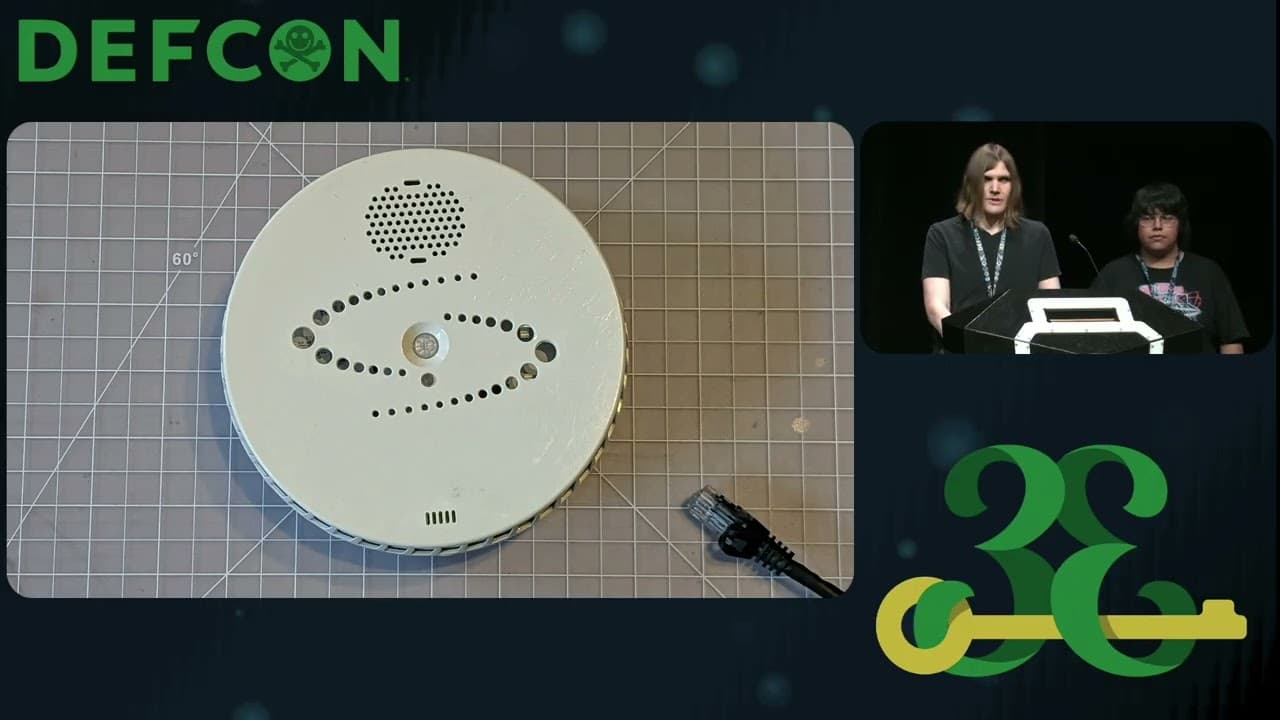
Unmasking the Snitch Puck: The Creepy IoT Surveillance Tech in the School Bathroom