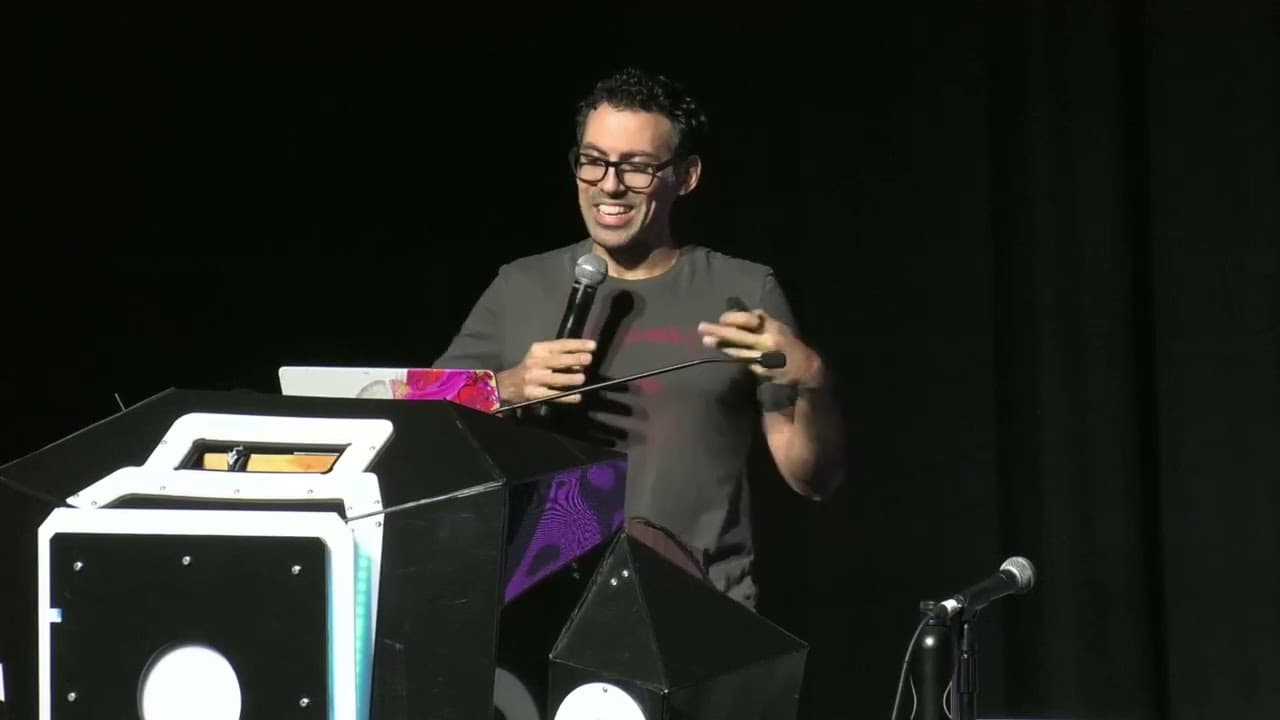
Hacking Humans: A Nurse's Perspective
This talk explores the application of social engineering techniques, specifically phishing, baiting, and physical impersonation, within healthcare environments. It highlights how attackers exploit human trust, urgency, and lack of digital literacy to gain unauthorized access to patient records and critical medical systems. The presentation emphasizes the need for cross-functional collaboration between clinical and IT teams to implement effective security protocols and incident response strategies. It concludes by advocating for a safety-first approach to cybersecurity that prioritizes patient well-being over strict compliance.
Why Healthcare Infrastructure Remains the Easiest Target for Social Engineering
TLDR: Healthcare environments are uniquely vulnerable to social engineering because they prioritize immediate patient care over rigid security protocols. Attackers exploit this by using high-pressure phishing, physical impersonation, and baiting to bypass authentication and gain access to sensitive patient records. Pentesters should focus on these human-centric vectors, as they often yield higher success rates than traditional network exploitation in clinical settings.
Security researchers often obsess over zero-day exploits and complex chain vulnerabilities, yet the most effective way to compromise a hospital network remains a well-crafted email or a fake ID badge. The recent ransomware attack on King’s College Hospital serves as a stark reminder that when clinical systems go offline, the impact is measured in patient outcomes, not just lost revenue. In high-stress environments like A&E or intensive care, staff are trained to prioritize speed and accessibility, which creates a massive blind spot for security teams.
The Mechanics of Clinical Social Engineering
Attackers targeting healthcare organizations do not need to be elite hackers. They need to be convincing. The most common vectors involve T1566-phishing and T1566.002-spearphishing-link campaigns that mimic internal management communications. By creating a sense of urgency—such as claiming that access to the Electronic Patient Record (EPR) system will be suspended unless the user re-authenticates—attackers can easily harvest credentials.
These phishing emails are often indistinguishable from legitimate IT support requests. In a busy ward, a nurse or doctor is unlikely to scrutinize the headers of an email that appears to come from their own IT department. Once the user clicks the link and enters their credentials into a spoofed login portal, the attacker has achieved T1078-valid-accounts access. This is a classic example of A07:2021-Identification and Authentication Failures being exploited at the human layer rather than the application layer.
Physical Access and the Trust Gap
While digital phishing is common, physical impersonation remains a potent, underutilized technique. An attacker posing as a contractor or delivery person can often gain access to restricted areas simply by wearing a uniform and carrying a fake ID badge. Once inside, they can exploit T1552-unsecured-credentials by finding unattended terminals or plugging in malicious USB devices.
Baiting is particularly effective in staff break rooms or waiting areas. A USB drive labeled "Patient Records" or "Staff Benefits" is almost guaranteed to be plugged into a workstation by a curious or helpful employee. This is not a failure of the technology; it is a failure of the security culture. When you are testing these environments, your goal should be to identify where the "trust gap" exists. If you can walk into a ward and no one challenges your presence, you have already won the engagement.
Technical Nuances for Pentesters
When conducting an engagement in a healthcare setting, focus on the intersection of T1021-remote-services and user behavior. Many healthcare systems rely on legacy software that lacks modern multi-factor authentication (MFA). If you find a portal that only requires a password, you have a high-value target.
During your reconnaissance, look for publicly available information about staff roles and shift patterns. Attackers use this to craft messages that sound authentic. For example, a message sent during a shift change is more likely to be opened and acted upon than one sent during a quiet period.
# Example of a simple credential harvesting payload structure
# Always ensure you have explicit, written authorization before testing
curl -X POST -d "username=target&password=password" https://spoofed-login-portal.com/login
Bridging the Gap Between IT and Clinical Staff
Defending against these attacks requires more than just better firewalls. It requires a fundamental shift in how IT security is communicated to clinical staff. Security teams must stop using jargon that alienates doctors and nurses. Instead of talking about "robust security postures," explain that MFA is like the keys to a drug cabinet—it is a necessary barrier to keep patients safe.
Implement scenario-based training that mirrors the actual pressures of a clinical environment. If a nurse is followed into a restricted area, what is the protocol? If a system goes down, who is the first point of contact? By involving clinical staff in the design of security protocols, you increase the likelihood that they will actually follow them.
What to Do Next
The next time you are scoping a healthcare engagement, push for a broader social engineering component. Don't just scan for open ports and vulnerable services. Test the human element. Can you get a staff member to share their credentials? Can you gain physical access to a terminal?
The goal is not to embarrass the staff, but to expose the systemic weaknesses that allow these attacks to succeed. If you can demonstrate how easily a patient's data can be compromised, you provide the evidence needed to justify better training, stronger authentication, and a more resilient security culture. Healthcare security is not about compliance; it is about protecting the people who are trying to save lives. Start your next test by looking at the people, not just the code.