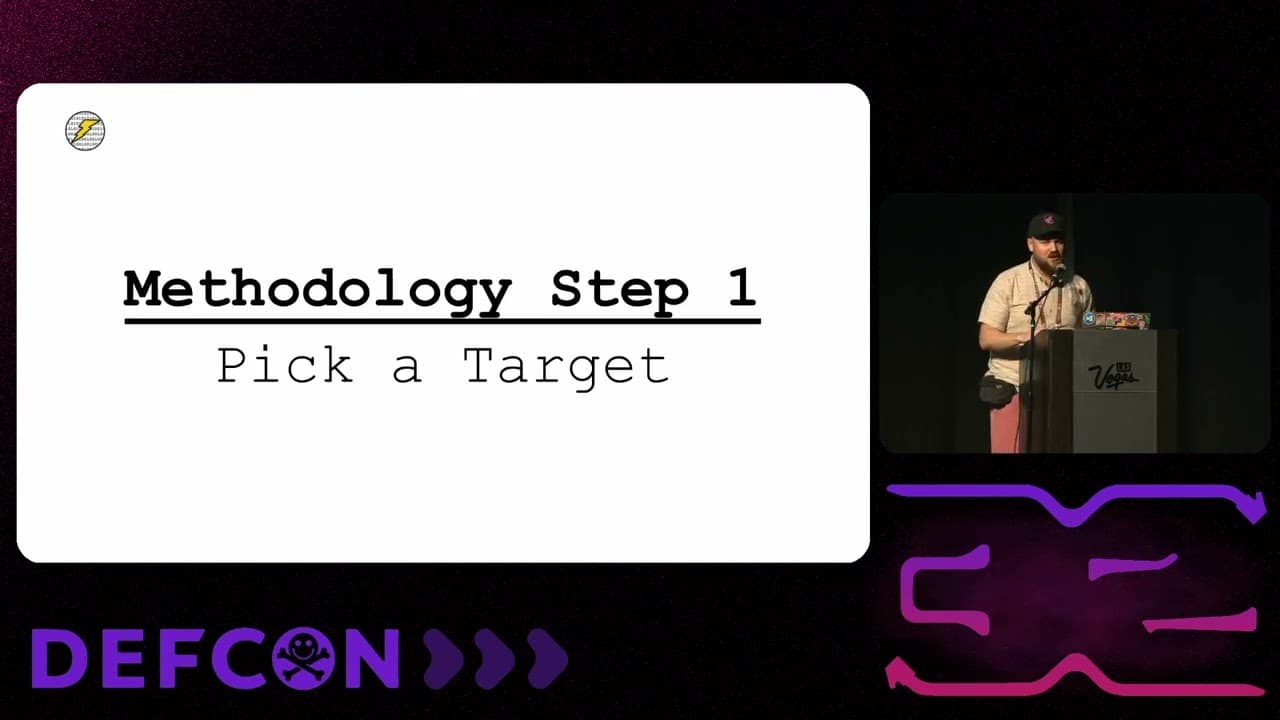
Hard Hat Brigade
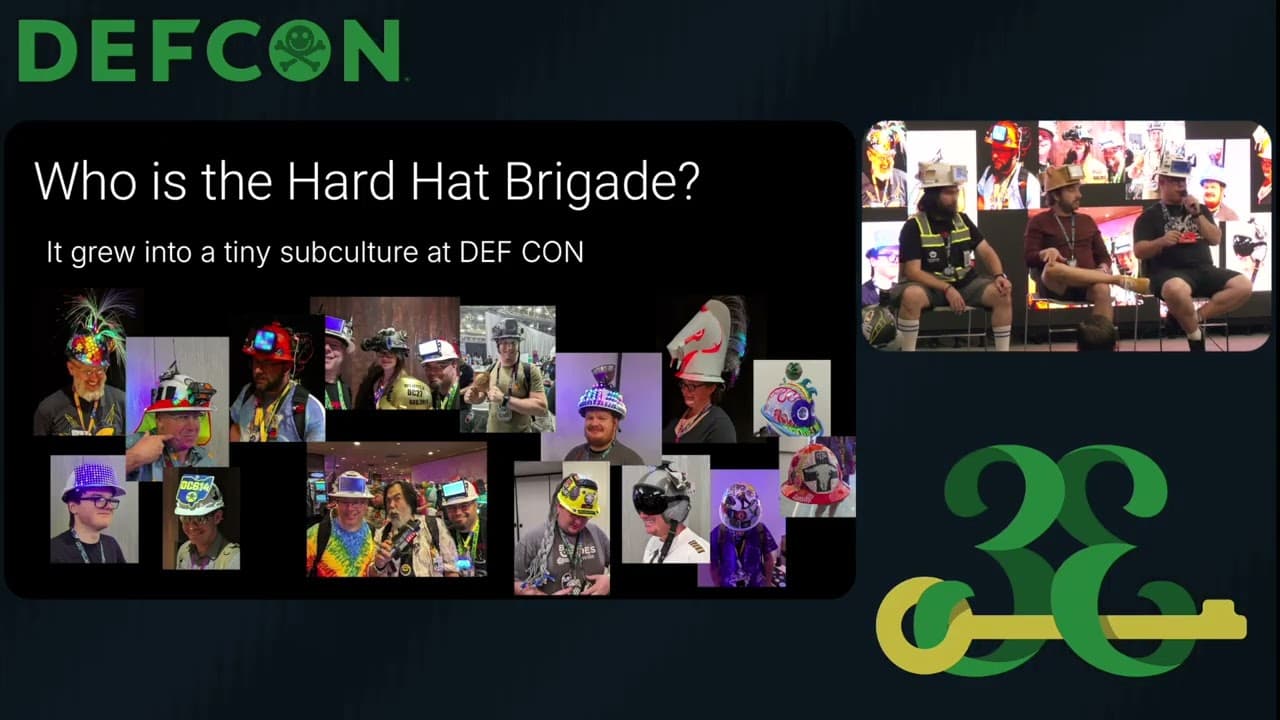
This panel discusses the origins and evolution of the Hard Hat Brigade, a community-driven subculture at DEF CON focused on hardware hacking and creative engineering. The speakers detail their experiences in building custom, hardware-based projects, including wearable devices and modified helmets, to foster engagement and curiosity within the security community. The talk emphasizes the value of hands-on, DIY hardware projects as a means to push technical skills and encourage collaboration among hackers. It serves as an introduction to the community's ethos rather than a technical deep dive into specific vulnerabilities.
Beyond the Screen: Why Hardware Hacking is the Next Frontier for Security Researchers
TLDR: The Hard Hat Brigade at DEF CON demonstrates that hardware hacking is not just for electrical engineers but a vital skill for any security researcher looking to expand their capabilities. By integrating custom hardware into wearable devices, these researchers push the boundaries of embedded systems security and physical interaction. This post explores why moving from software-only bug hunting to hardware-based experimentation is essential for understanding the modern threat landscape.
Security research often feels like a race to find the next remote code execution in a web application or a clever bypass in an authentication flow. While those remain critical, the most interesting work is increasingly happening at the intersection of physical hardware and software. The Hard Hat Brigade, a long-standing community at DEF CON, proves that you do not need a massive lab or a degree in electrical engineering to start breaking things. They treat hardware as a canvas for security research, using tools like Dremel rotary tools, 3D printers, and microcontrollers like the ESP32 to build custom, interactive security tools.
The Power of Physical Constraints
Most software vulnerabilities exist in a vacuum of abstraction. When you move into hardware, you are forced to deal with physical constraints: power consumption, memory limitations, and the reality of signal integrity. This is where the real learning happens. When you are trying to fit a custom SSH honey pot onto a device that has to fit inside a helmet, you stop thinking about theoretical exploits and start thinking about resource management and efficient code.
The shift from software to hardware forces you to understand the underlying architecture. You are no longer just looking at an API endpoint; you are looking at the traces on a PCB, the voltage levels on a GPIO pin, and the bootloader sequence of an embedded system. This level of visibility is often missing in cloud-native environments. If you can master the basics of hardware, you gain a massive advantage in understanding how devices actually communicate, which is often where the most overlooked vulnerabilities reside.
Bridging the Gap Between Art and Engineering
What makes the work of researchers like those in the Hard Hat Brigade so compelling is their focus on "bling" as a functional component. It is easy to dismiss a flashing LED as a gimmick, but in the context of security, it is a visual indicator of state. A device that changes color when it detects a specific Wi-Fi probe request or a Bluetooth Low Energy advertisement is a powerful tool for reconnaissance.
For a pentester, this means building custom hardware that can act as a passive listener or an active probe. You can use an Arduino or an ESP32 to create a device that logs network traffic or monitors for unauthorized access points while you are physically on-site. The goal is to create tools that are not just effective but also unobtrusive. If you can hide your hardware inside a common object, you have a much higher chance of success during a physical security assessment.
Getting Started with Embedded Security
If you want to start building, do not let the complexity of hardware intimidate you. Start small. Buy an ESP32 development board and learn how to use the ESP-IDF to write firmware that interacts with the real world. Once you are comfortable with that, look into OWASP IoT Security to understand the common pitfalls in embedded device design.
The most common mistake researchers make is trying to build a perfect, finished product on the first try. That is the wrong approach. The Hard Hat Brigade’s philosophy is to build, break, and iterate. Your first project will likely be a mess of wires and hot glue, and that is perfectly fine. The value is in the process of debugging the hardware, learning how to solder, and understanding how to interface with different protocols like I2C, SPI, and UART.
The Real-World Impact
During a penetration test, you will often encounter proprietary hardware that does not have a standard interface. This is where your ability to perform hardware-level analysis becomes a superpower. If you can dump the firmware from a flash chip or intercept the communication between two components on a board, you can often find hardcoded credentials, debug interfaces, or insecure update mechanisms that are completely invisible to a software-only scanner.
The National Vulnerability Database is full of vulnerabilities that were discovered through hardware analysis. From side-channel attacks that leak encryption keys to simple UART shells left open on production devices, the hardware layer is a goldmine for anyone willing to look.
Stop waiting for the perfect tool to be released on GitHub. Build it yourself. Whether it is a custom badge that tracks your network activity or a modified helmet that acts as a portable security lab, the act of building will teach you more about security than any whitepaper ever could. The next time you are on an engagement, look at the hardware around you and ask yourself how it works, how it fails, and how you can make it do something it was never intended to do. That is the essence of security research.
Tools Used
Target Technologies
Up Next From This Conference
Similar Talks
Hacking Apple's USB-C Port Controller
Unmasking the Snitch Puck: The Creepy IoT Surveillance Tech in the School Bathroom