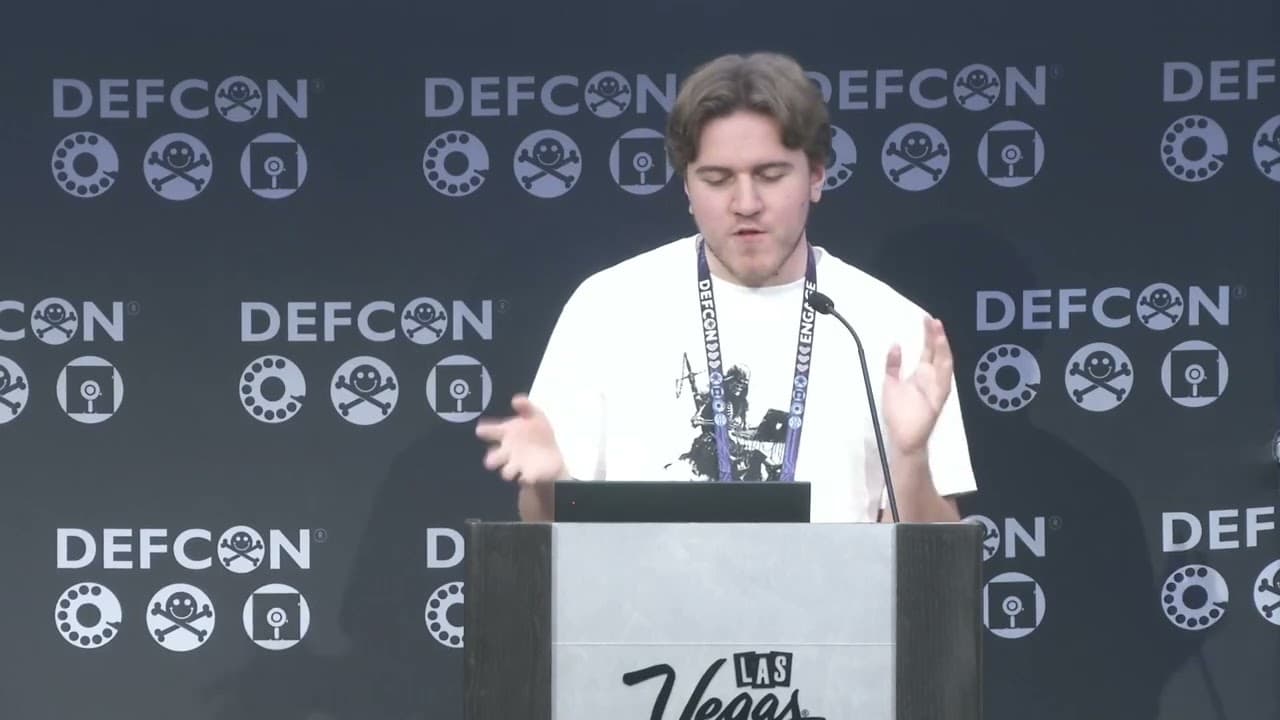
Log In Through the Front Door: Automating Defense Against Credential Leaks
This talk demonstrates the threat posed by credential stuffing and account takeover attacks using leaked credentials from the dark web. It analyzes the lifecycle of stolen credentials, from initial compromise via infostealers to their sale and use in automated attacks against enterprise systems. The speaker outlines an automated defense strategy involving the ingestion of leaked credential datasets, proactive password resets, and mandatory multi-factor authentication. The presentation provides a practical workflow for security teams to identify and remediate compromised accounts before they are exploited.
Stop Chasing Zero-Days and Start Monitoring Your Leaked Credentials
TLDR: Attackers are bypassing complex security controls by simply logging in with valid credentials harvested from the dark web. This talk outlines how to automate the ingestion of massive credential datasets to proactively identify and reset compromised accounts. By treating leaked credentials as a high-risk indicator of compromise, security teams can stop account takeover attacks before they escalate into full-scale breaches.
Attackers are not breaking in; they are logging in. While the industry remains obsessed with finding the next zero-day or complex chain of vulnerabilities, the most effective path to the crown jewels remains the front door. Credential stuffing and account takeover attacks are not just noise. They are the primary infection vector for some of the most damaging breaches in recent history. When an attacker has a valid username and password, they do not need to trigger an IDS or bypass an EDR. They simply authenticate, establish a session, and begin moving laterally.
The Mechanics of Credential Harvesting
The threat landscape for stolen credentials is split into two primary categories: Combolists and Stealer Logs. Combolists are the classic, aggregated datasets of username and password pairs, often compiled from years of third-party data breaches. These lists are massive, often containing billions of records, and are readily available on the dark web for a few dollars. They are the bread and butter of automated credential stuffing tools.
Stealer logs, however, are far more dangerous. These are generated by infostealers—malware families that covertly exfiltrate sensitive data from an infected machine. Unlike a static combolist, a stealer log contains a treasure trove of metadata: browser cookies, session tokens, and saved passwords. This allows an attacker to bypass multi-factor authentication (MFA) entirely by performing session hijacking. If an attacker can import a valid session cookie into their own browser, they effectively become the user. They do not need to know the password, and they do not need to solve a CAPTCHA.
Automating the Defense
Defending against this requires a shift in mindset. You cannot wait for a breach to occur before you start looking for your organization's credentials on the dark web. You need to build an automated pipeline that ingests these datasets and maps them to your internal user base.
The architecture for this is straightforward but requires discipline. You need a mechanism to ingest these datasets, which are often stored in formats like CSV, TXT, or JSON. Using a platform like Azure Data Bricks allows you to process these terabytes of data efficiently. The workflow is as follows:
- Ingestion: Pull the latest combolists and stealer logs from reputable threat intelligence sources.
- Normalization: Deduplicate and normalize the data to ensure you are working with a clean set of credentials.
- Matching: Compare the leaked credentials against your internal Active Directory or identity provider records.
- Remediation: If a match is found, trigger an automated password reset and force a global session logout for that user.
The goal is to identify the exposure before the attacker does. If you find a match, you must assume the account is already compromised. Do not just reset the password; you must invalidate all active sessions to prevent the attacker from using a hijacked cookie to maintain access.
Real-World Applicability for Pentesters
During a penetration test or a red team engagement, you should be looking for these same exposures. If you are testing an organization, check if their employees have been part of any recent breaches. You can use tools like Have I Been Pwned to get a quick sense of the exposure, but for a professional engagement, you should be looking at the same datasets the attackers are using.
If you find a valid credential, your objective is to demonstrate the impact. Can you access the VPN? Can you reach the internal SharePoint site? Can you pivot to other internal resources? The impact of a successful account takeover is often much higher than a single vulnerability exploit because it grants you the same level of access as a legitimate employee.
The Defensive Reality Check
Defenders often fall into the trap of thinking that low volume means low risk. If you set up a monitoring program and only see a few findings, do not assume your security is perfect. It is a sign of strength. It means you are staying ahead of the curve. However, you must remain vigilant. The absence of findings today does not mean there are no threats tomorrow.
The most critical defensive control is mandatory MFA. While it does not stop session hijacking, it is the single most effective barrier against basic credential stuffing. If you are not enforcing MFA for every single user, you are leaving the door wide open. Combine this with a robust credential monitoring program, and you significantly raise the cost of an attack.
Stop waiting for the next big breach to make headlines. Start treating leaked credentials as a critical vulnerability and build the automation to neutralize them before they are used against you. If you are not already monitoring the dark web for your organization's data, you are already behind.
Vulnerability Classes
Tools Used
Target Technologies
OWASP Categories
All Tags
Up Next From This Conference
Similar Talks

Kill List: Hacking an Assassination Site on the Dark Web
Counter Deception: Defending Yourself in a World Full of Lies