
Opening Remarks
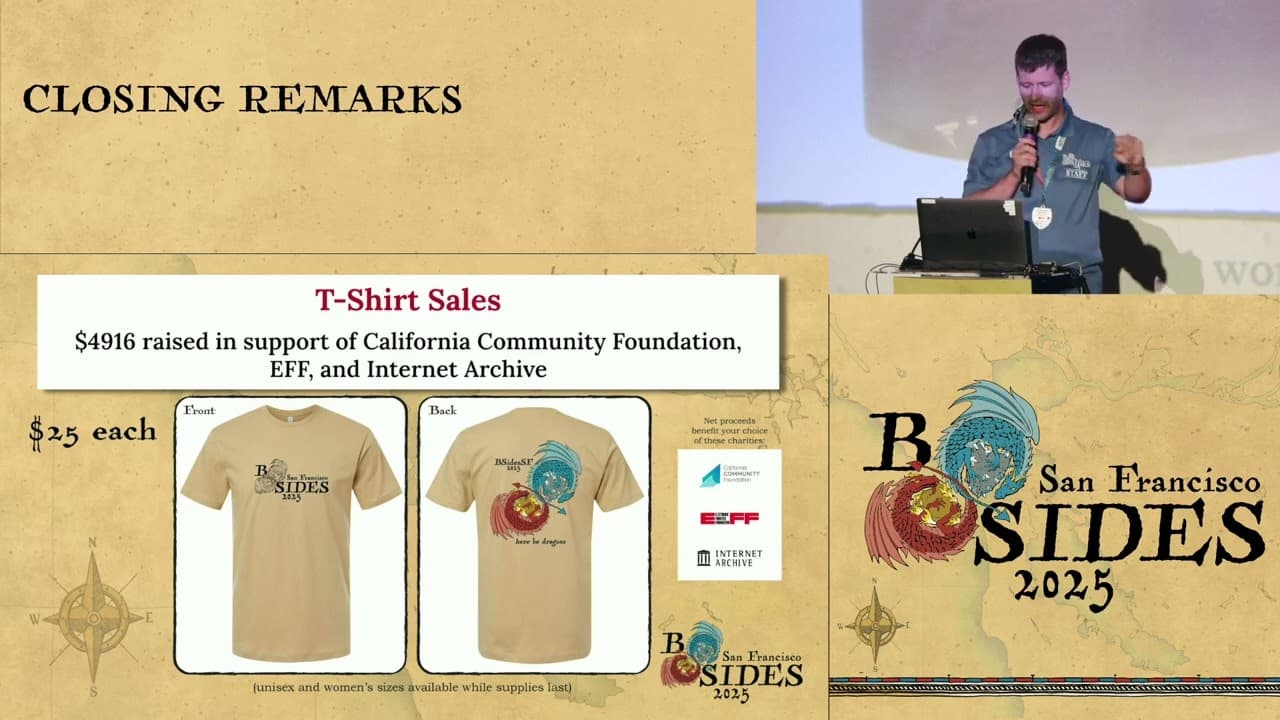
This video contains the opening remarks for the Security BSides San Francisco 2025 conference. The speaker outlines the community-driven nature of the event, including logistics, village activities, and the code of conduct. It serves as an administrative introduction to the conference schedule and resources.
Community-Driven Security: Why BSides Still Matters for Offensive Research
TLDR: Security BSides remains a critical venue for independent researchers to share novel exploit chains and bypass techniques that often bypass traditional vendor-led conferences. By prioritizing community-led sessions over corporate marketing, these events provide a unique look at the "next big thing" in offensive security. Pentesters and bug bounty hunters should treat these gatherings as essential intelligence sources for identifying emerging attack vectors before they become widespread.
Security research is often trapped in a cycle of vendor-driven narratives and sanitized disclosures. While major industry conferences have their place, the most interesting, raw, and actionable research frequently surfaces at community-run events like Security BSides. These gatherings strip away the corporate polish and focus on the mechanics of exploitation, providing a sandbox for researchers to present findings that might not fit the rigid criteria of larger, more commercialized venues.
The Value of Independent Research
When you look at the history of vulnerability research, many of the most impactful techniques originated from independent, community-driven efforts. The ethos of BSides, which started in 2009, was specifically designed to fill the gaps left by larger conferences. It is a place where the "next big thing" is discussed, not because it has a marketing budget, but because it has technical merit.
For a pentester or a bug bounty hunter, the value here is clear. You are not just getting a slide deck; you are getting a look at how your peers are thinking about modern infrastructure. Whether it is a novel way to bypass OWASP Top 10 controls or a deep dive into a specific CVE that has been mischaracterized by vendors, these talks often provide the missing link in a complex exploit chain.
Why You Should Care About Community-Led Events
The technical level at these events is consistently high because the audience is comprised of practitioners. When a speaker presents a new technique, they are doing so in front of people who will immediately try to break it, replicate it, or find its limitations. This peer-review process is far more rigorous than any editorial board.
Consider the recent shift in how we approach cloud-native security. While vendors push "robust security postures," researchers at these events are busy demonstrating how misconfigured IAM roles or exposed metadata services can lead to full account takeover. These are not theoretical risks; they are the bread and butter of modern red team engagements. If you are not paying attention to the research coming out of these community hubs, you are likely missing out on the very tools and techniques that will be used against your clients or your own infrastructure in the next six months.
Connecting the Dots
One of the most significant advantages of attending or following these talks is the ability to connect disparate pieces of information. A talk on a specific GitHub repository might seem niche, but when combined with a new vendor security advisory regarding a zero-day, it suddenly becomes a high-priority item for your next engagement.
The best researchers are those who can synthesize these findings. They do not just look at a single vulnerability; they look at the ecosystem. They ask: "If I can bypass this specific authentication check, what does that mean for the underlying service architecture?" This is the kind of thinking that leads to high-impact bug bounty reports and successful red team operations.
The Defensive Reality
While the focus here is on offensive research, the defensive implications are equally important. Understanding how an attacker thinks—and more importantly, how they chain together seemingly minor vulnerabilities—is the only way to build resilient systems. When you see a researcher demonstrate a bypass for a common security control, you are seeing the future of defensive engineering.
Defenders need to move away from static, compliance-based checklists and toward a model of continuous, threat-informed defense. This means keeping a close eye on the research that is being presented at these events. If a technique is being discussed at a BSides event today, it will be in an automated scanner or an exploit kit tomorrow.
What to Do Next
If you are a pentester or a researcher, stop waiting for the industry to tell you what is important. Start looking at the research being shared by your peers. Follow the official conference archives and look for the talks that focus on the "how" rather than the "what."
The next time you are stuck on a target, remember that the solution might not be in a commercial tool or a vendor whitepaper. It might be in a 20-minute talk from a researcher who spent three months digging into a specific protocol or service. The community is the most powerful tool you have. Use it, contribute to it, and most importantly, listen to what it is telling you about the state of security today. The landscape is moving faster than ever, and the only way to keep up is to stay connected to the people who are actually doing the work.
Up Next From This Conference
Similar Talks
Social Engineering A.I. and Subverting H.I.
How Not to Do a Physical Security Penetration Test
