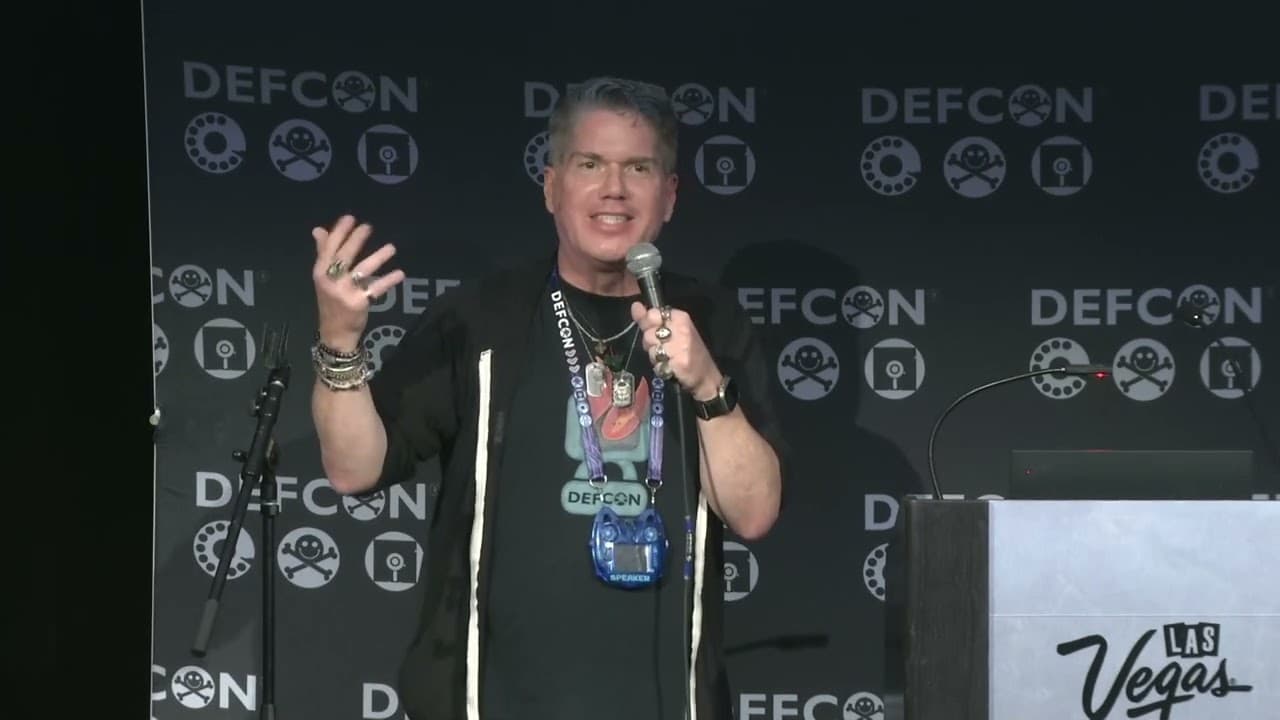
The Power of Persuasion: Better Security Through Manipulation
This talk explores the application of psychological heuristics to improve security outcomes and influence organizational behavior. It examines how principles like reciprocity, authority, social proof, and perceptual contrast can be leveraged to gain buy-in for security initiatives and drive compliance. The presentation provides actionable strategies for security professionals to communicate more effectively with non-technical teams and stakeholders. It emphasizes that understanding human psychology is as critical as technical controls for achieving robust security postures.
Why Your Security Policy Fails: The Psychology of Compliance
TLDR: Security professionals often struggle to get buy-in for necessary controls because they ignore the psychological heuristics that drive human decision-making. By leveraging principles like reciprocity, social proof, and perceptual contrast, you can significantly increase compliance rates without needing more technical enforcement. This post breaks down how to apply these behavioral science concepts to your next security project to turn friction into cooperation.
Technical controls are only as effective as the humans who follow them. We spend years mastering the intricacies of OWASP Top 10 vulnerabilities and building complex CI/CD pipelines, yet we often fail to secure the most critical component of any system: the user. If your security policy is technically sound but operationally ignored, you have a human-factor vulnerability that no amount of patching will fix.
The Heuristics of Influence
Humans are not rational actors. We are biological machines running on evolutionary shortcuts, or heuristics, that help us navigate a complex world. When you ask a developer to rotate their API keys or a finance team to implement MFA, you aren't just asking for a technical change. You are asking them to override their natural inclination to prioritize convenience and social harmony.
The most effective way to influence these groups is to stop fighting their psychology and start working with it.
Reciprocity: The Power of Small Favors
Reciprocity is one of the most deeply ingrained social norms. When someone does something for us, we feel a near-compulsive need to return the favor. In a security context, this is your most powerful tool for gaining cooperation.
If you only interact with other teams when you are flagging a critical vulnerability or blocking a deployment, you have already lost. You are the "no" person. Instead, dedicate time to being genuinely helpful. Fix a minor bug in their codebase, help them clarify a confusing requirement, or provide documentation that makes their job easier. When you eventually need to ask for a significant security change, they are far more likely to agree because they view you as a partner rather than an adversary.
Social Proof: Don't Just Tell, Show
People look to their peers to determine appropriate behavior. If you want to drive adoption of a new security tool, don't just send an email from the CISO. Identify "security champions" within the target team—the developers who are already respected for their technical skill—and get them to advocate for the change.
When you present data, frame it in terms of peer behavior. Instead of saying "everyone must do this," show them that "95% of the engineering team has already migrated to this new authentication flow." This creates a powerful, unspoken pressure to conform. Be careful, however: never highlight negative behaviors. Telling a team that "most people are failing to rotate their passwords" actually signals that poor security hygiene is the norm, which can inadvertently encourage the very behavior you are trying to stop.
Perceptual Contrast: Managing Expectations
Our brains evaluate information in relative, not absolute, terms. If you present a massive, overwhelming list of security requirements, the recipient will immediately feel defeated. The task seems impossible, so they disengage.
Use perceptual contrast to your advantage. Start by showing the full, daunting scope of the security framework—the "ideal state." Then, immediately pivot to the "pragmatic controls" you are actually asking for today. By anchoring their expectations to the massive list, the smaller, actionable items you are proposing seem reasonable and easy to achieve. This is the same reason a $30 burger doesn't seem expensive after you’ve looked at a $75 steak on the same menu.
Applying Psychology to Your Next Engagement
As a pentester, you can use these same principles to improve your engagement outcomes. When you deliver a report, don't just dump a list of CVEs and walk away. Frame your findings in a way that aligns with the business goals of the team you are testing.
If you are testing a financial application, focus your report on the business impact of the vulnerabilities you found. Explain how a specific SQL injection could lead to a direct loss of revenue or a regulatory fine. By speaking their language, you demonstrate that you understand their domain. This builds the trust necessary for them to take your recommendations seriously.
The Defensive Reality
Defenders must recognize that security is a social process. If you are building a security program, stop focusing exclusively on technical enforcement. Start building relationships. If you are a security leader, your success is measured by how well you can influence other departments to prioritize security alongside their own goals.
The next time you face pushback on a security initiative, pause. Ask yourself if you are trying to force a technical solution onto a human problem. Are you being helpful enough to trigger reciprocity? Are you using social proof to show that your request is the standard? Are you using perceptual contrast to make your request feel achievable?
We are all in this together. The most successful security programs are not the ones with the most restrictive policies, but the ones that make the secure path the easiest and most socially rewarding one to take. Stop trying to be the smartest person in the room and start being the most influential. Your security posture will be better for it.