V2X Exploitation
This talk explores the attack surface of Vehicle-to-Everything (V2X) communication protocols, specifically focusing on vulnerabilities in IEEE 802.11p and C-V2X implementations. The speaker demonstrates how attackers can exploit these protocols to perform denial-of-service, integrity attacks, and location spoofing by manipulating communication between vehicles, road-side units, and cellular infrastructure. The presentation highlights the critical role of authentication mechanisms and the risks associated with misconfigured V2X application servers and GPS clock spoofing. The session provides a technical overview of how these vulnerabilities can be leveraged to compromise autonomous vehicle safety and security.
Why Your Next Autonomous Vehicle Might Be Vulnerable to GPS Spoofing
TLDR: Modern V2X communication protocols like IEEE 802.11p and C-V2X are designed to improve road safety, but they introduce significant attack surfaces for remote exploitation. By manipulating the communication between vehicles, road-side units, and cellular infrastructure, researchers can perform denial-of-service, integrity attacks, and location spoofing. Pentesters should focus on the authentication mechanisms and the trust models used by these protocols to identify potential entry points for vehicle compromise.
Autonomous vehicles rely on a constant stream of data to make split-second decisions. This data comes from onboard sensors, but increasingly, it comes from the world around them via Vehicle-to-Everything (V2X) communication. While the industry markets this as a safety breakthrough, the underlying protocols are essentially distributed networks that trust incoming packets with minimal verification. If you are a researcher or pentester, you should stop viewing the car as a closed system and start viewing it as a mobile node in a poorly secured, high-speed network.
The Mechanics of V2X Exploitation
V2X communication is split into two main categories: intra-vehicle and inter-vehicle. Intra-vehicle communication handles data within the car, while inter-vehicle communication connects the car to other road entities, such as other vehicles, pedestrians, and infrastructure. The protocols governing these connections, specifically IEEE 802.11p and C-V2X, are the primary targets for exploitation.
The vulnerability lies in the trust model. These protocols assume that if a packet is signed or originates from a known source, it is legitimate. However, the authentication latency requirements for high-speed driving often lead to weak or bypassed checks. An attacker with a Software Defined Radio (SDR) can inject malicious packets into the network, effectively masquerading as a road-side unit or another vehicle.
Attacking Availability and Integrity
Denial-of-service (DoS) is the most straightforward attack vector. By flooding the network with authentication requests, an attacker can overwhelm the vehicle's electronic control unit (ECU). Because the vehicle is programmed to prioritize these safety-critical packets, the ECU will dedicate its processing power to handling the flood, leading to a system hang or a crash. In a vehicle, a system hang often triggers a "fail-safe" mode, which can result in the sudden loss of power steering or braking functionality.
Integrity attacks are more subtle. By injecting false messages, an attacker can manipulate the vehicle's perception of its environment. For example, an attacker can broadcast a message indicating that a traffic light is red when it is actually green, or that a pedestrian is in the road when the path is clear. This falls directly into the OWASP A01:2021-Broken Access Control category, as the vehicle fails to verify the authorization of the sender before acting on the data.
The GPS Clock Spoofing Vector
Perhaps the most dangerous technique is GPS clock spoofing. Vehicles use GPS not just for navigation, but as a primary time source for synchronizing network packets. If an attacker can spoof the GPS signal, they can manipulate the vehicle's internal clock. Since many authentication protocols rely on timestamps to prevent replay attacks, shifting the clock allows an attacker to bypass these protections entirely.
Once the clock is desynchronized, the vehicle will reject legitimate packets and accept replayed ones, effectively opening the door for a full adversary-in-the-middle (AITM) attack. This is a classic identification and authentication failure that is difficult to detect because the vehicle believes it is operating on valid, synchronized data.
Real-World Pentesters and Bug Bounties
If you are performing a security assessment on an automotive system, you need to look beyond the web interface. Start by mapping the V2X communication channels. Use an SDR to capture traffic and look for anomalies in the packet structure. Are the messages signed? Is the signature verified? If you can find a way to inject a packet that the vehicle accepts without a valid signature, you have found a critical vulnerability.
When testing, focus on the application server that handles the V2X data. These servers are often misconfigured and lack the necessary rate-limiting to prevent DoS attacks. If you can compromise the server, you can potentially push malicious updates or commands to an entire fleet of vehicles.
Defensive Considerations
Defending against these attacks requires a shift in how we handle trust. Vehicle manufacturers must implement more robust authentication mechanisms that do not rely solely on timestamps. Hardware Security Modules (HSMs) should be used to store cryptographic keys, and all incoming V2X data must be validated against secondary, independent sensor data. If the V2X data contradicts the onboard sensors, the vehicle should ignore the V2X input and alert the driver.
The security of autonomous vehicles is not just about protecting the car; it is about protecting the entire transportation ecosystem. As these systems become more interconnected, the potential for large-scale disruption grows. Researchers must continue to push for better standards and more rigorous testing, because the current state of V2X security is far from where it needs to be for mass deployment. If you are looking for your next research project, start by digging into the implementation details of the V2X stack in your own vehicle. You might be surprised by what you find.
Vulnerability Classes
Tools Used
Target Technologies
🔒 BSides Mumbai 2024 - The Ultimate Cybersecurity Talks & Discussions Playlist! 🔒
Up Next From This Conference

Similar Talks
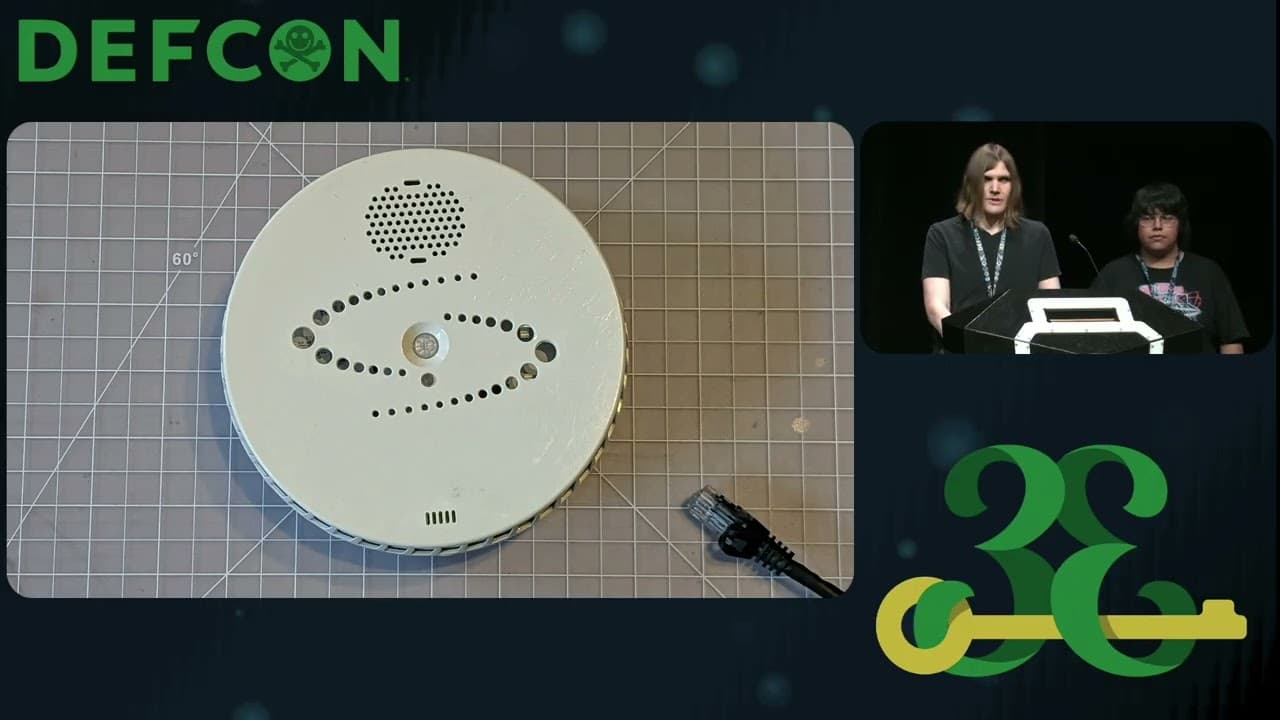
Unmasking the Snitch Puck: The Creepy IoT Surveillance Tech in the School Bathroom
Hiding in Plain Sight: Next-Level Digital Privacy