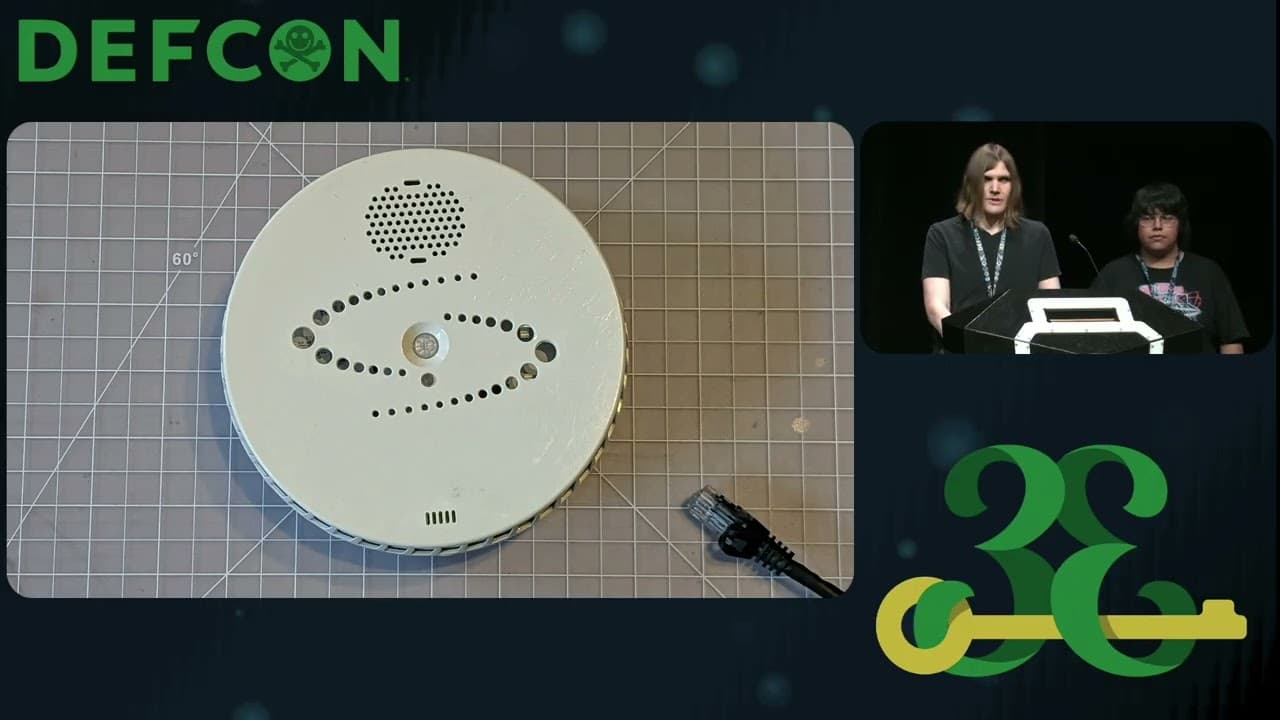
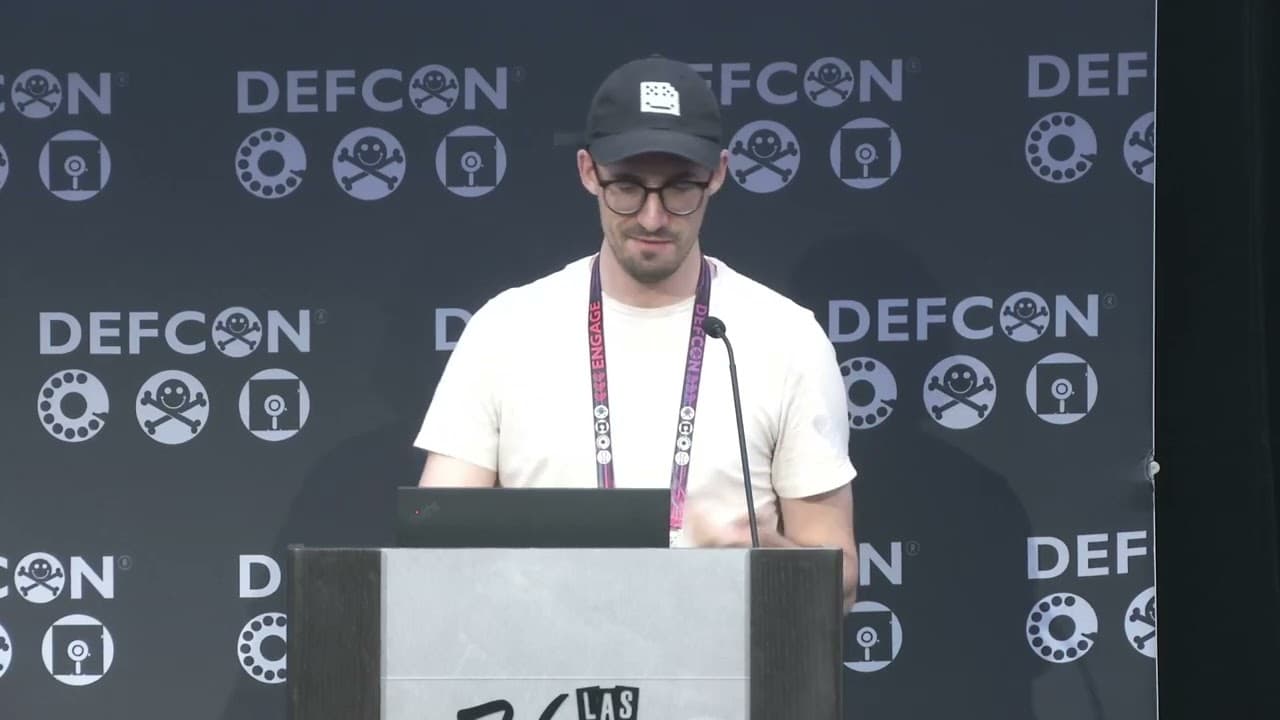
You Might Be a WarDriver If...
This presentation provides a humorous, community-focused overview of the practical realities and lifestyle habits associated with wardriving. It highlights the use of custom hardware, mobile devices, and specialized antennas for mapping wireless networks in urban environments. The talk serves as a lighthearted look at the hobbyist side of RF reconnaissance and network discovery.
Beyond the Drive: Modernizing Wireless Reconnaissance with ESP32 and Mobile Integration
TLDR: Modern wireless reconnaissance has evolved from simple laptop-based sniffing to highly automated, distributed sensor networks. By leveraging low-cost ESP32 microcontrollers and mobile-integrated mapping tools, researchers can now achieve persistent, high-fidelity coverage of urban RF environments. This post breaks down the current state of hardware-assisted wardriving and how to integrate these workflows into your next physical security assessment.
Wireless reconnaissance is often dismissed as a relic of the early 2000s, a hobbyist pursuit involving a laptop and a high-gain antenna duct-taped to a car roof. That perspective is fundamentally flawed. In the context of modern physical security assessments, RF reconnaissance remains one of the most effective ways to map the attack surface of a target facility before you ever step foot on the property. The shift from monolithic, high-power setups to distributed, low-power sensor arrays has changed the game for anyone performing site surveys or red team engagements.
The Hardware Shift: From Laptops to Microcontrollers
The core of modern wireless mapping is the ESP32, a low-cost, power-efficient system-on-a-chip that has become the standard for portable RF sensors. Unlike traditional Wi-Fi adapters that require a host machine to process frames, an ESP32 can be configured to act as a standalone probe, capturing BSSIDs, signal strength, and channel information with minimal power draw.
For a pentester, this means you can deploy multiple sensors across a target site or within a vehicle without the overhead of a dedicated workstation. These devices can be hidden in plain sight, running for days on a small battery pack, and logging data to an SD card or transmitting it via Bluetooth to a mobile device. The WiGLE platform remains the industry standard for aggregating this data, providing a massive, crowdsourced database of wireless networks that can be queried to identify potential entry points or to correlate signal strength with physical locations.
Integrating Mobile Workflows
The real power of modern wardriving lies in the integration between these sensors and mobile applications. Instead of manually parsing PCAP files, researchers are increasingly using tools like Wardriver-UK to automate the collection and visualization of network data. This toolset allows for real-time mapping of Wi-Fi environments, providing an immediate visual representation of the target's wireless footprint.
When you are on-site, the goal is to identify networks that are misconfigured or vulnerable to known exploits. While the OWASP Wireless Security documentation provides a comprehensive overview of common pitfalls, the practical application during an engagement often comes down to identifying weak encryption or rogue access points that provide a bridge into the internal network.
# Example of a basic scan using a wireless interface in monitor mode
airmon-ng start wlan0
airodump-ng wlan0mon --output-format csv -w scan_results
This data, when combined with GPS coordinates, allows you to build a heat map of the target's wireless infrastructure. During a physical assessment, this map is invaluable. It tells you exactly where the signal is strongest, which often correlates to the location of the server room or the primary office space. If you find a network with weak signal strength at the perimeter, it might be a candidate for a targeted deauthentication attack or a rogue AP deployment.
Real-World Applicability for Pentesters
During a red team engagement, the objective is to gain a foothold. Wireless reconnaissance is the first step in that process. By mapping the wireless environment, you can identify:
- Corporate SSIDs: These are your primary targets for credential harvesting or man-in-the-middle attacks.
- IoT/Guest Networks: These are often poorly segmented and can serve as a pivot point into the internal network.
- Rogue Access Points: These are often deployed by employees without IT approval and represent a significant security gap.
The impact of a successful wireless compromise is high. Once you have a foothold, you can perform internal network scanning, identify vulnerable services, and potentially escalate privileges. The key is to treat the wireless environment as an extension of the internal network, not as a separate, isolated entity.
Defensive Considerations
For blue teams, the primary defense against this type of reconnaissance is visibility. You cannot defend what you cannot see. Implementing a wireless intrusion prevention system (WIPS) is the first step in identifying rogue access points and unauthorized scanning activity. Furthermore, ensuring that all corporate networks are using WPA3 or at least WPA2-Enterprise with certificate-based authentication significantly raises the bar for attackers.
Regularly auditing your wireless environment for unauthorized devices and ensuring that guest networks are strictly isolated from the internal network are non-negotiable. If you are not monitoring your RF environment, you are effectively leaving the front door unlocked.
The tools and techniques discussed here are not just for hobbyists. They are powerful, accessible, and highly effective for anyone tasked with assessing the security of a physical location. Whether you are a bug bounty hunter looking for a new angle or a red teamer preparing for an engagement, the ability to map and analyze the wireless environment is a critical skill. Start by building a simple ESP32-based sensor and see what you can find in your own neighborhood. You might be surprised at the amount of information that is leaking out of your own office or home. The next time you are on a site visit, don't just look for cameras and badge readers. Look for the signals that are broadcasting the location of your next target.
Tools Used
Up Next From This Conference
Similar Talks
Inside the FBI's Secret Encrypted Phone Company 'Anom'

Kill List: Hacking an Assassination Site on the Dark Web