Cybersecurity at Home: Protecting Yourself, Your Family, and Your Loved Ones
This talk provides a high-level overview of personal cybersecurity hygiene, focusing on securing home networks, personal devices, and online accounts. It covers fundamental security practices such as implementing strong passwords, multi-factor authentication, and network segmentation to mitigate common threats. The speaker emphasizes the importance of educating family members on social engineering awareness and safe online behavior. No specific technical exploits or novel vulnerabilities were demonstrated.
Why Your Home Router Is the Easiest Pivot Point in Your Network
TLDR: Most home routers ship with default credentials and weak encryption standards that make them trivial targets for initial access. Attackers use these devices as persistent pivot points to monitor traffic, perform man-in-the-middle attacks, and bypass local security controls. Pentesters and researchers should prioritize auditing these devices during engagements to demonstrate how easily a compromised router undermines the entire internal security model.
Security professionals often spend their days hunting for complex RCEs or chaining together multi-step exploit paths in enterprise environments. Yet, we frequently ignore the most glaring vulnerability sitting in our own living rooms: the home router. It is the gateway to everything, and for most users, it is a black box that has not been touched since the day it was pulled out of the box.
When you are performing an internal penetration test, the router is rarely the first thing you look at. You are likely focused on Active Directory misconfigurations, unpatched internal web applications, or lateral movement via SMB. But if you can compromise the router, you own the network. You control the DNS, you can intercept traffic, and you can effectively disable any security controls that rely on network-level filtering.
The Default Credential Problem
The most common issue remains the reliance on default administrative credentials. Many consumer-grade routers still ship with "admin/admin" or "admin/password" as the default login. Even when vendors force a password change, the interface often lacks basic rate-limiting or account lockout mechanisms. This makes brute-forcing the web management interface a trivial task for anyone with local network access.
If you are testing a client's home office setup, start by scanning for the management interface. You will often find it listening on port 80 or 443. If you can reach the login page, you are already halfway there. Tools like nmap can quickly identify these services. Once you have access, you can change the DNS settings to point to a server you control, allowing you to perform DNS spoofing and redirect traffic to malicious payloads.
Encryption and Network Segmentation
Beyond credentials, the configuration of the wireless network itself is often outdated. Many users still rely on WPA2 or even WPA, which are susceptible to various attacks if the pre-shared key is weak. If you are looking for a way to get onto the network without physical access, capturing the WPA handshake is the standard approach.
Once you are on the network, the lack of segmentation is your best friend. Most home routers do not implement VLANs or separate SSIDs for different types of devices. Your smart fridge, your printer, and your primary workstation are all sitting on the same flat network. This is a massive identification and authentication failure in the context of network architecture. If you compromise an IoT device with a known vulnerability, you have immediate access to the rest of the network.
The IoT Threat Vector
IoT devices are the silent threat in this equation. They are often built with minimal security, run outdated firmware, and have hardcoded credentials that cannot be changed. When you are on an engagement, look for these devices. They are rarely patched, and they often have open ports that provide a direct path to the internal network.
If you find a device that is running an outdated version of Linux or a proprietary RTOS, check for known vulnerabilities. Many of these devices are affected by CVE-2023-27240 or similar flaws that allow for remote code execution. Once you have a shell on an IoT device, you can use it as a jump box to scan the rest of the network and identify more valuable targets.
Defensive Hardening
Defending against these threats requires a shift in mindset. First, change the default credentials on every single device. If the device does not allow you to change the password, replace it. Second, implement network segmentation. Use a guest network for your IoT devices and keep your primary machines on a separate, isolated network.
Third, keep your firmware updated. Most routers have an auto-update feature, but it is often disabled by default. Enable it. If your router is no longer receiving updates from the vendor, it is time to upgrade. For those who want more control, consider using open-source firmware like pfSense or OpenWrt. These platforms provide enterprise-level features like advanced firewall rules, VPN support, and granular network segmentation that you simply cannot get with consumer-grade hardware.
Finally, use a VPN. A VPN encrypts your traffic and protects you from man-in-the-middle attacks, especially when you are using public Wi-Fi. It is a simple, effective control that adds a layer of security to your network traffic.
The next time you are on an engagement, do not overlook the router. It is the most critical piece of infrastructure in the network, and it is often the most vulnerable. If you can compromise the router, you can compromise everything else. Take the time to audit these devices, and you will find that they are often the key to a successful penetration test. The goal is to raise the bar, and that starts with securing the gateway to the network.
Target Technologies
OWASP Categories
Up Next From This Conference


Similar Talks
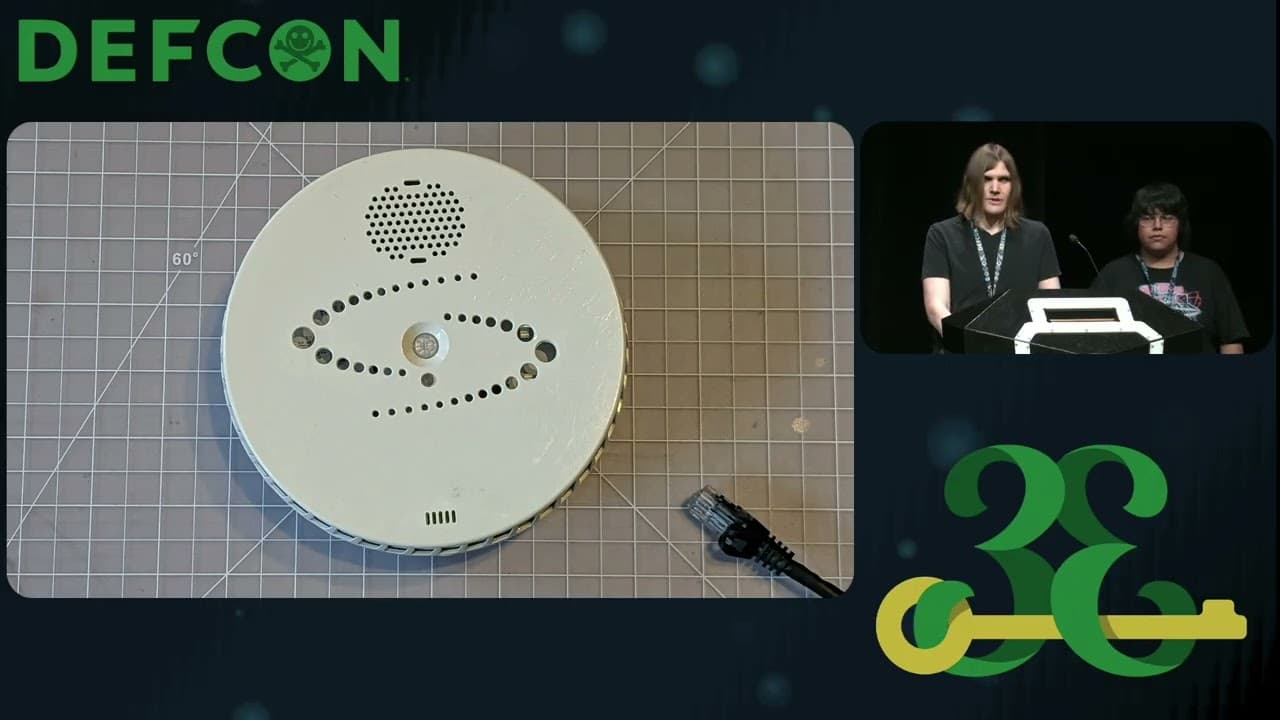
Unmasking the Snitch Puck: The Creepy IoT Surveillance Tech in the School Bathroom

Anyone Can Hack IoT: A Beginner's Guide to Hacking Your First IoT Device