Digital ID: A Success Story Or Dystopian Nightmare?
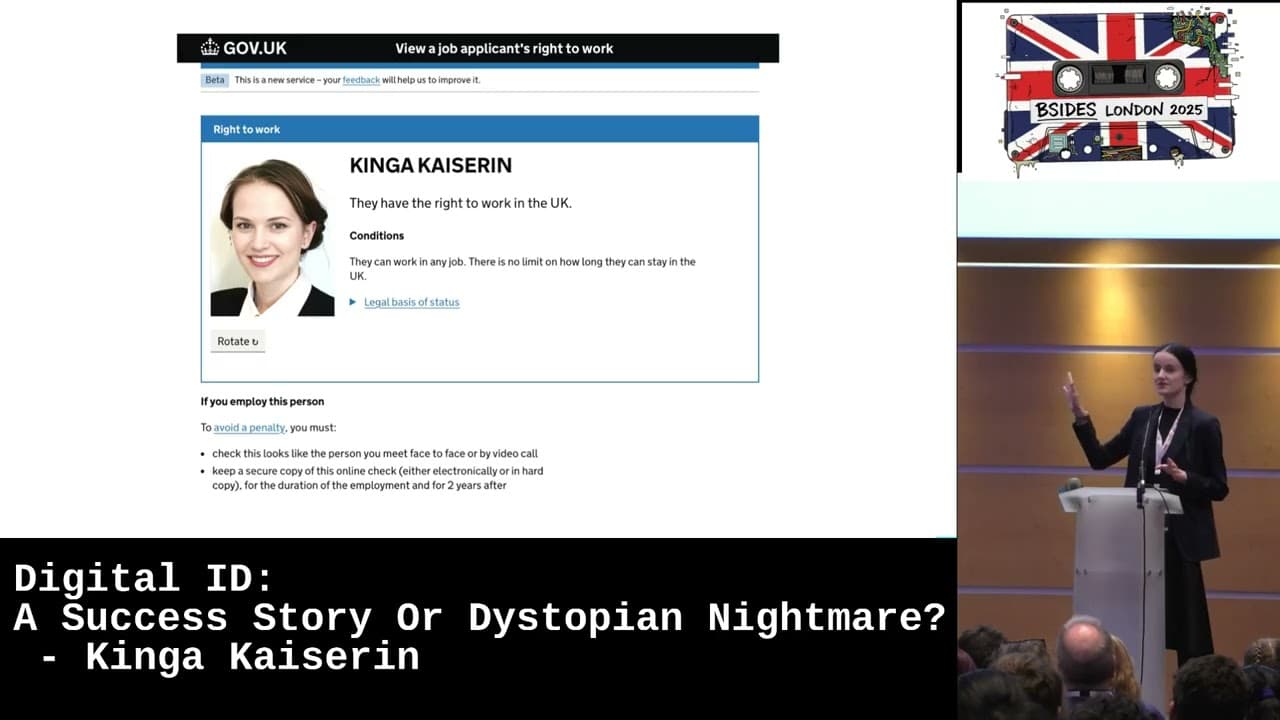
This presentation analyzes the security and privacy implications of implementing national digital identity systems, using the UK's proposed 'BritCard' as a case study. It examines the risks of centralized databases, function creep, and the potential for surveillance and exclusion of marginalized populations. The talk highlights how digital ID systems can be exploited by bad actors or misused by governments, drawing parallels to existing systems in Canada and India. It concludes by discussing the trade-offs between convenience and civil liberties in the context of digital authentication.
The Hidden Risks of Centralized Digital ID Systems
TLDR: Digital identity systems often promise convenience but introduce significant architectural risks, including centralized points of failure and dangerous function creep. By analyzing the UK's proposed BritCard and historical breaches in Canada and India, this post explores how these systems fail to prevent identity theft and instead create massive, high-value targets for attackers. Pentesters should focus on the authentication flows and data aggregation points that turn these systems into single-source-of-truth vulnerabilities.
Digital identity is no longer a theoretical debate about privacy; it is an active engineering challenge that directly impacts the attack surface of every citizen. When governments push for centralized digital ID systems, they are essentially building a honeypot that aggregates the most sensitive PII imaginable. As researchers, we need to look past the marketing of "secure authentication" and examine the underlying architecture. If the system relies on a single, centralized database to verify identity, it is not a question of if it will be compromised, but when.
The Architecture of Failure
The core problem with many national digital ID implementations is the reliance on centralized databases. When you tie a digital credential to a single backend, you create a high-value target for Identification and Authentication Failures. The research presented at BSides London 2025 regarding the UK's proposed BritCard highlights this perfectly. The government claims these systems will prevent identity theft, but the reality is that they create a single point of failure.
Consider the 2020 breach of the Canada Revenue Agency and the 2018 Aadhaar system exposure in India. In both cases, the centralization of identity data meant that once the authentication layer was bypassed, the entire population's data was effectively exposed. Attackers do not need to find a zero-day in the encryption; they only need to find a flaw in the implementation of the identity provider (IdP) or the API endpoints that facilitate the verification process.
Function Creep and the Data Aggregation Trap
Function creep is the silent killer of security. A system designed for "right to work" checks inevitably expands to include health records, tax filings, and social media verification. From a red team perspective, this is a goldmine. Every time a new service is integrated into the digital ID, the attack surface grows.
If you are testing an application that integrates with a national digital ID, do not just look at the login page. Look at the API calls that happen after the handshake. Are there secondary endpoints that return more data than necessary? Are there insecure direct object references (IDOR) that allow you to query the identity of other users once you have a valid session token?
In many of these systems, the "share code" or "token" mechanism is the most critical component. If you can intercept or manipulate the share code, you can potentially impersonate a user or gain unauthorized access to their profile. The technical flow often looks like this:
# Example of a typical identity verification flow
# 1. User generates a share code via the government portal
# 2. User provides the code to the service provider
# 3. Service provider calls the IdP API with the code
curl -X POST https://api.identity-provider.gov/v1/verify \
     -H "Authorization: Bearer <SP_TOKEN>" \
     -d '{"share_code": "XYZ-123-ABC"}'
If the SP_TOKEN is misconfigured or if the share_code is predictable, the entire authentication chain collapses. Pentesters should focus on the IdP's API documentation and look for ways to manipulate the request parameters to bypass verification checks.
The Reality of Biometric Authentication
Biometrics are often touted as the ultimate security measure, but they are fundamentally flawed because they cannot be rotated. If your password is leaked, you change it. If your facial recognition hash is leaked from a government database, you are compromised for life. The research shows that even when systems are "secure," the human element—insider threats—remains the biggest risk.
In the case of the Indian Aadhaar system, it was not a sophisticated nation-state actor that caused the initial exposure; it was internal access controls that were too permissive. When you have thousands of government employees with access to a centralized database, the probability of an insider threat or a compromised credential approaches 100%.
Defensive Considerations
For those working on the defensive side, the focus must be on minimizing the data shared during authentication. Implement Zero Knowledge Proofs where possible. A service provider does not need to know your date of birth or your home address to verify that you are over 18. They only need a boolean response from the IdP. By reducing the amount of PII transmitted during the verification process, you significantly lower the impact of a potential breach.
Furthermore, ensure that your integration with any digital ID system follows the principle of least privilege. Do not store the identity tokens or share codes longer than necessary. If you are building a service that relies on these IDs, treat the incoming data as untrusted input, regardless of the source.
Moving Forward
We are at a crossroads. Digital identity systems can provide genuine utility for remote access and administrative efficiency, but only if they are built with a decentralized, privacy-first mindset. The current trend of building massive, centralized databases is a regression in security maturity.
As we move toward 2029 and the expected rollout of mandatory digital ID for employment, the burden is on us to audit these systems rigorously. Do not take the government's claims of "security" at face value. Test the APIs, challenge the assumptions about data storage, and look for the cracks in the architecture. The next big identity breach is likely already in the design phase.
Vulnerability Classes
Target Technologies
Attack Techniques
OWASP Categories
All Tags
Up Next From This Conference

Opening Remarks

A Technical Evaluation Of Real-World Passkey Security
Digital ID: A Success Story Or Dystopian Nightmare?
Similar Talks

Inside the FBI's Secret Encrypted Phone Company 'Anom'
Unmasking the Snitch Puck: The Creepy IoT Surveillance Tech in the School Bathroom