From Chaos to Calm: Mastering InfoSec Audits
This talk provides a strategic framework for managing information security audits, focusing on the preparation and execution phases. It outlines the importance of aligning security controls with organizational policies and regulatory standards to ensure compliance and operational resilience. The speaker emphasizes the role of leadership support and clear communication in streamlining the audit process and reducing organizational stress.
Stop Treating Compliance Audits Like a Root Cause Analysis
TLDR: Information security audits are often viewed as a bureaucratic hurdle, but they are actually a high-stakes exercise in evidence-based security validation. By treating an audit as a structured penetration test of your own internal controls, you can identify critical gaps before an external auditor does. This approach transforms a stressful compliance event into a repeatable process that strengthens your security posture and simplifies future certification renewals.
Most security professionals view audits as a tax on their time. You spend weeks gathering screenshots, chasing down developers for evidence of patch management, and explaining why a specific control is not implemented exactly as the OWASP ASVS suggests. This is the wrong mindset. If you treat an audit as a passive exercise in checking boxes, you miss the opportunity to use the auditor as a free, external red team.
The Audit as a Controlled Engagement
Auditors are not your enemy, but they are not your friends either. They are looking for evidence that your stated security controls actually exist and function as intended. When you claim that your organization follows a specific NIST SP 800-53 control, the auditor will demand proof. If you cannot provide that proof, you have a gap. If you have a gap, you have a vulnerability.
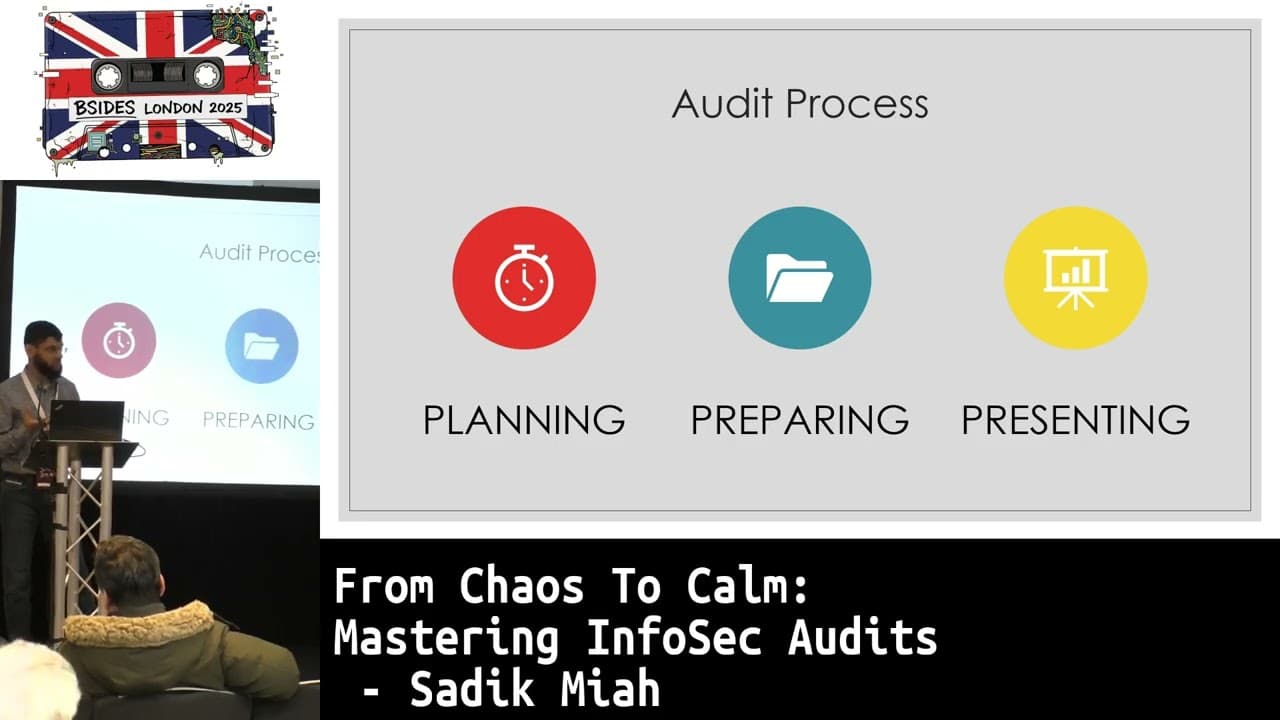
Think of the audit process in three distinct phases: planning, preparing, and presenting. Most teams fail during the planning phase because they do not define their "why." Are you pursuing ISO 27001 certification to satisfy a customer requirement, or are you trying to validate that your incident response plan actually works? If you do not know your goal, you cannot prioritize your controls.
Mapping Controls to Reality
The most common point of failure during an audit is the disconnect between policy and implementation. You might have a policy that mandates monthly vulnerability scanning, but if your NVD feed integration is broken or your scanner is not covering your entire cloud footprint, you are failing the audit.
During the preparation phase, you must map your technical controls to the specific requirements of the audit framework. If you are using OpenSCAP to automate compliance checks, do not just run the tool and hope for the best. You need to verify that the rules being enforced are actually relevant to your environment. A common mistake is enabling every rule in a baseline profile, which creates a mountain of noise and false positives that will frustrate both your team and the auditor.
When you are preparing evidence, focus on the "what" and the "how." If an auditor asks for proof of patch management, do not just send a spreadsheet of installed packages. Send a report that shows the time delta between a CVE release and the deployment of the fix across your production fleet. This level of detail demonstrates that you have a mature process, not just a set of scripts.
Managing the Human Element
Technical controls are only half the battle. The other half is the human element. You will be asked to provide evidence from various teams, including DevOps, HR, and legal. If these teams do not understand the importance of the audit, they will treat your requests as low-priority tasks.
You need to secure leadership buy-in before the audit begins. This is not about getting a signature on a document; it is about ensuring that when you need a developer to pull logs or a manager to sign off on an access review, they understand that this is a business-critical activity. When you have that support, you can assign specific SMEs to own the evidence collection for their respective domains. This prevents the "headless chicken" syndrome where one security engineer tries to answer every question from the auditor.
Turning Audits into Actionable Intelligence
If you find a gap during your internal audit preparation, do not hide it. Document it, create a remediation plan, and show the auditor that you are already aware of the issue and are working to fix it. Auditors appreciate transparency. It shows that you have a functioning risk management process.
The goal of an audit is to provide assurance to third parties, but the byproduct should be a more resilient organization. If you are constantly scrambling to pass audits, you are doing it wrong. You should be building systems that generate audit evidence as a natural output of their operation. If your CI/CD pipeline automatically logs every deployment, every test result, and every approval, you have already done 90% of the work for your next audit.
Stop viewing compliance as a static state. It is a dynamic process of continuous validation. The next time you are staring down a list of audit requirements, look for the technical controls that are the most difficult to prove. Those are your highest-risk areas. Focus your energy there. If you can prove those controls are working, the rest of the audit will be a formality. Use the audit to force your organization to document its processes, clean up its technical debt, and prove that your security claims are backed by hard data.
All Tags
Up Next From This Conference
From Chaos to Calm: Mastering InfoSec Audits
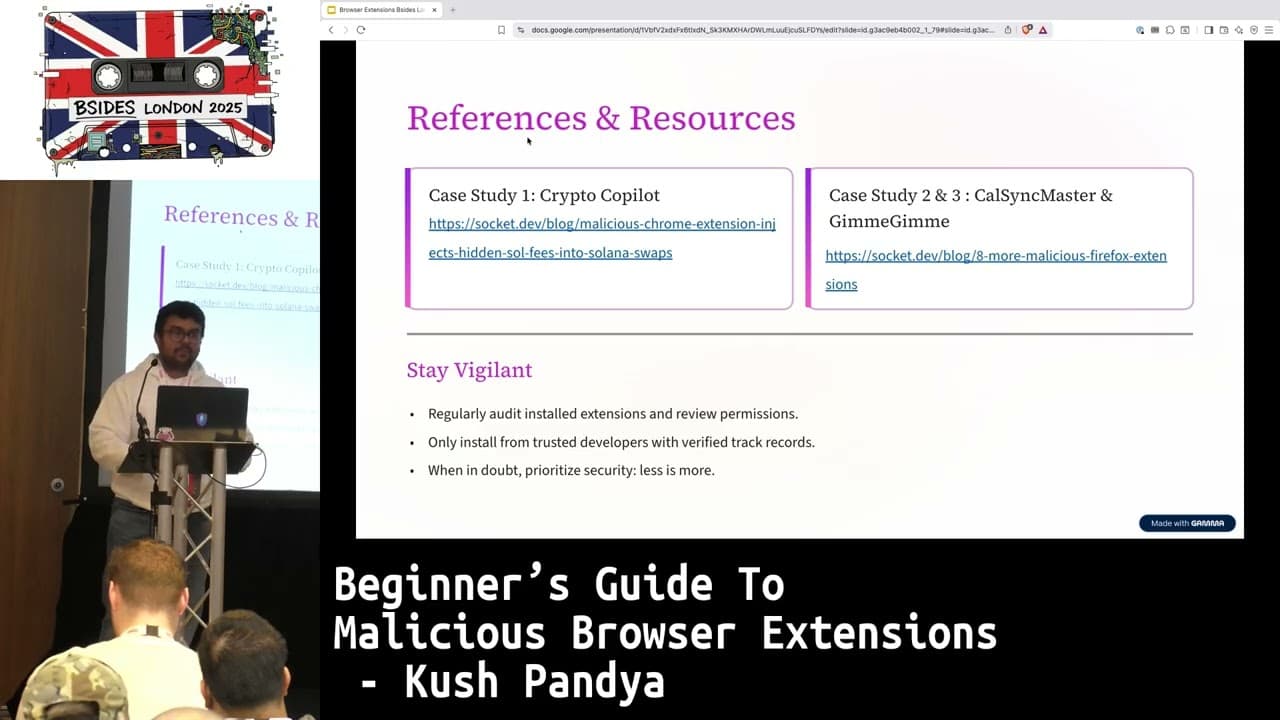
Beginner's Guide To Malicious Browser Extensions