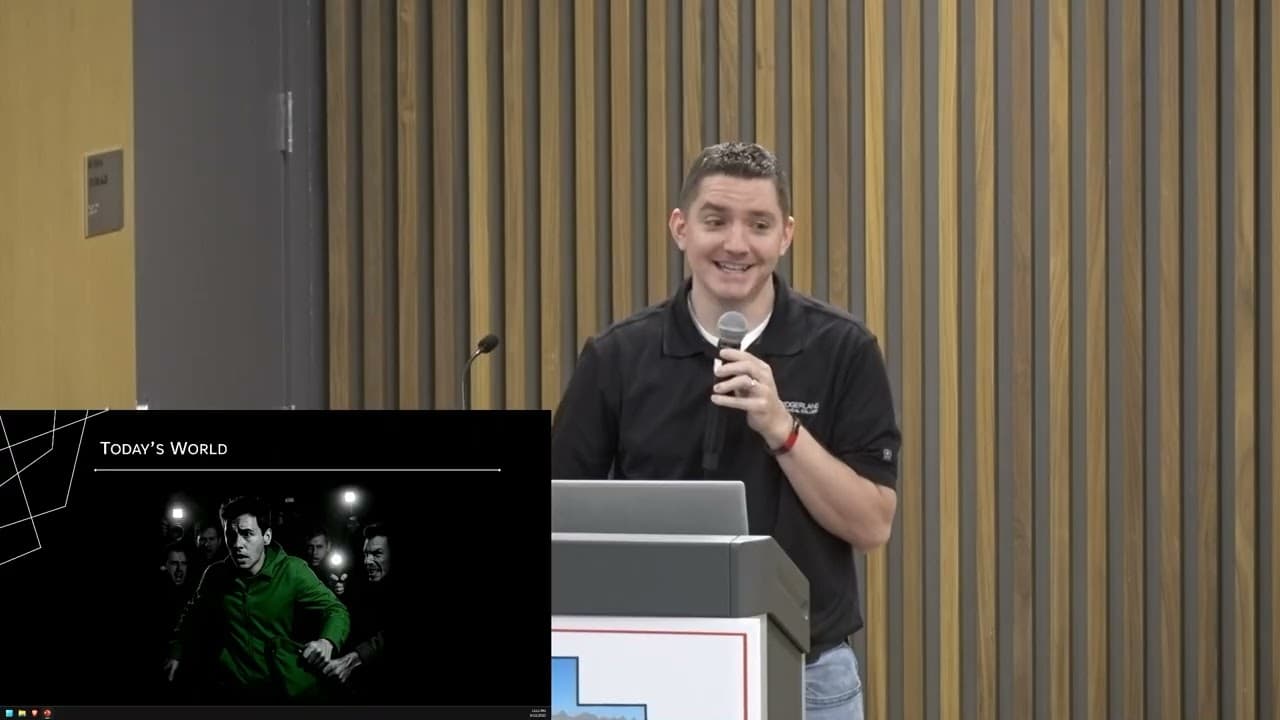
WHOIS Your Daddy: Tracking Iranian-backed Cyber Operations with Passive DNS
This talk demonstrates how to use passive DNS data to track and expand the infrastructure footprint of the Iranian-backed threat actor MuddyWater. By analyzing name server relationships and domain registration patterns, the speaker identifies over 2,500 malicious domains linked to the actor's operations. The research highlights the effectiveness of pivoting on shared infrastructure, such as specific name servers, to uncover previously unknown command-and-control (C2) nodes. The presentation emphasizes the importance of analyzing infrastructure metadata to identify threat actor patterns and improve proactive detection.
Beyond the IOC: How Passive DNS Reveals Infrastructure Patterns
TLDR: Threat actors like MuddyWater rely on predictable infrastructure patterns to manage their command-and-control (C2) operations. By pivoting from a handful of known malicious domains to their shared name server infrastructure, researchers can uncover thousands of related nodes. This approach moves beyond static indicator-of-compromise (IOC) matching, allowing defenders and researchers to map out entire adversary campaigns before they fully deploy.
Security research often gets bogged down in the hunt for the next zero-day, but the most effective way to track sophisticated threat actors is by analyzing their operational habits. When you look at how groups like MuddyWater manage their C2 infrastructure, you quickly realize that they are creatures of habit. They don't just register random domains; they build infrastructure using consistent, repeatable naming conventions and shared hosting configurations.
The Mechanics of Infrastructure Pivoting
Most analysts start with a set of known malicious domains—the classic IOC approach. If you see a domain associated with a specific malware family, you block it and move on. That is a losing game. The real value lies in using passive DNS data to look at the "daddy" of those domains: the name servers.
In the case of MuddyWater, the research shows a clear pattern of using specific name server infrastructure to manage their C2 nodes. When you take a domain that is already flagged for malicious activity and query its name server, you aren't just looking at one bad actor; you are looking at the entire neighborhood. By pivoting on these name servers, you can identify other domains that share the same configuration. This is where the numbers jump from a handful of domains to thousands.
The technical process is straightforward but requires access to a robust passive DNS database like DomainTools. You aren't looking for a vulnerability in the DNS protocol itself; you are looking for the metadata footprint left behind by the attacker. When an attacker registers a domain, they often use the same registrar, the same name server, and the same hosting provider for multiple operations. If you can identify the unique identifiers in that setup—like a specific name server string—you can query for every other domain that uses that same infrastructure.
Identifying the "Roommate" Effect
One of the most interesting aspects of this research is the concept of "roommates." When you find a name server that hosts multiple domains, you have to distinguish between legitimate shared hosting and malicious infrastructure. A legitimate hosting provider might host thousands of unrelated sites on the same name server. However, when you see a cluster of domains that all share a naming convention—such as using two or three technology-themed terms—and they all resolve to the same IP address space, you are likely looking at a dedicated C2 cluster.
For example, if you see a domain like smartcloudcompany.com and notice it uses a name server like ns1.hosterdaddy.net, you shouldn't just block that one domain. You should pivot to hosterdaddy.net and see what else is living there. If you find 30 other domains that all follow the same naming pattern and were registered within the same timeframe, you have effectively mapped out a significant portion of the attacker's current infrastructure.
This is a powerful technique for any pentester or researcher. During an engagement, if you find a C2 callback, don't just report the IP. Map the infrastructure. Look at the passive DNS history of the domain. Is it part of a larger, coordinated effort? Are there other domains registered by the same entity that haven't been weaponized yet?
Defensive Implications and Proactive Hunting
Defenders often struggle with the sheer volume of alerts generated by static IOCs. By focusing on infrastructure patterns, you can shift from reactive blocking to proactive hunting. If you know that a specific threat actor uses a particular naming convention or a specific set of name servers, you can create alerts for any new domain that matches those criteria.
This doesn't mean you should block entire name servers—that would lead to massive false positives and break legitimate traffic. Instead, use this intelligence to prioritize your threat hunting. If a new domain pops up that matches the infrastructure profile of a known threat actor, it warrants a deeper look. Check the SSL certificate, the registration date, and the hosting provider. If it aligns with the actor's known "tying their shoes" pattern, you have a high-confidence lead.
Why This Matters for Your Next Engagement
The takeaway for researchers and bug bounty hunters is simple: stop treating domains as isolated entities. They are part of a larger, multi-dimensional ecosystem. When you are analyzing a target, look at the infrastructure as a whole. Use tools to map the relationships between domains, name servers, and IP addresses.
The next time you find a suspicious domain, ask yourself: who is the daddy? Who registered it? What name servers are they using? What other domains are sharing that space? By connecting these dots, you can often uncover the full scope of an adversary's operation, providing much more value than a single, static IOC ever could. This is how you move from being a passive observer to an active hunter in the threat landscape. Keep digging, keep pivoting, and always look for the pattern in the noise.
Vulnerability Classes
Tools Used
Target Technologies
Attack Techniques
All Tags
Up Next From This Conference
Similar Talks
Inside the FBI's Secret Encrypted Phone Company 'Anom'
Kill List: Hacking an Assassination Site on the Dark Web